



Key takeaway / Summary of topic answer
Female reproductive hormone testing before pregnancy is a crucial step in evaluating hormones that affect ovarian function and overall reproductive readiness, especially for those planning to conceive or undergoing fertility treatment. Key hormones include FSH, LH, Estradiol (E2), Progesterone, AMH, and Prolactin, which provide insight into ovulation, ovarian reserve, menstrual cycle quality, and endocrine balance. Since the menstrual cycle and hormones are closely connected, testing should be timed appropriately, such as days 2-5 of the cycle for FSH, LH, and E2, and the post-ovulation phase for Progesterone, to ensure accurate results. In addition, maintaining good health habits, including adequate sleep, stress management, proper nutrition, and regular exercise, helps support hormonal balance. However, results should always be interpreted alongside symptoms, medical history, and pregnancy plans by a reproductive medicine specialist.
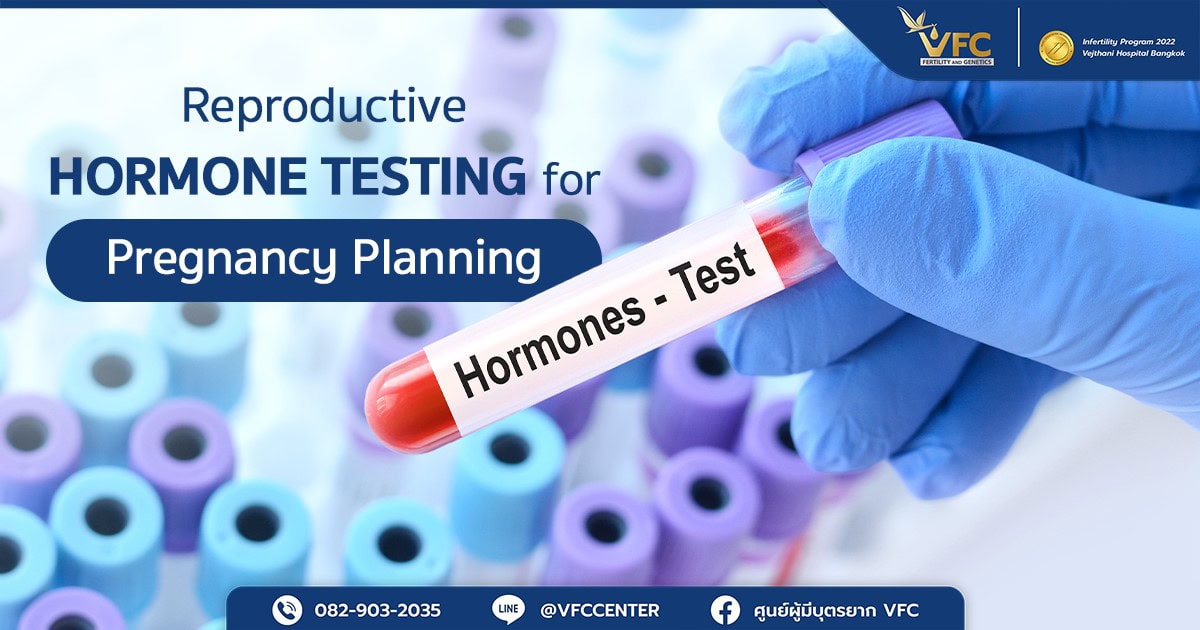
Female hormone testing is an essential process for evaluating reproductive health and preparing for pregnancy. Hormones play a direct role in regulating ovulation, supporting pregnancy, and maintaining balance within the reproductive system. These assessments allow doctors to develop appropriate treatment and care plans, helping ensure a smoother path to conception.
Definition and Importance of Reproductive Hormone Testing
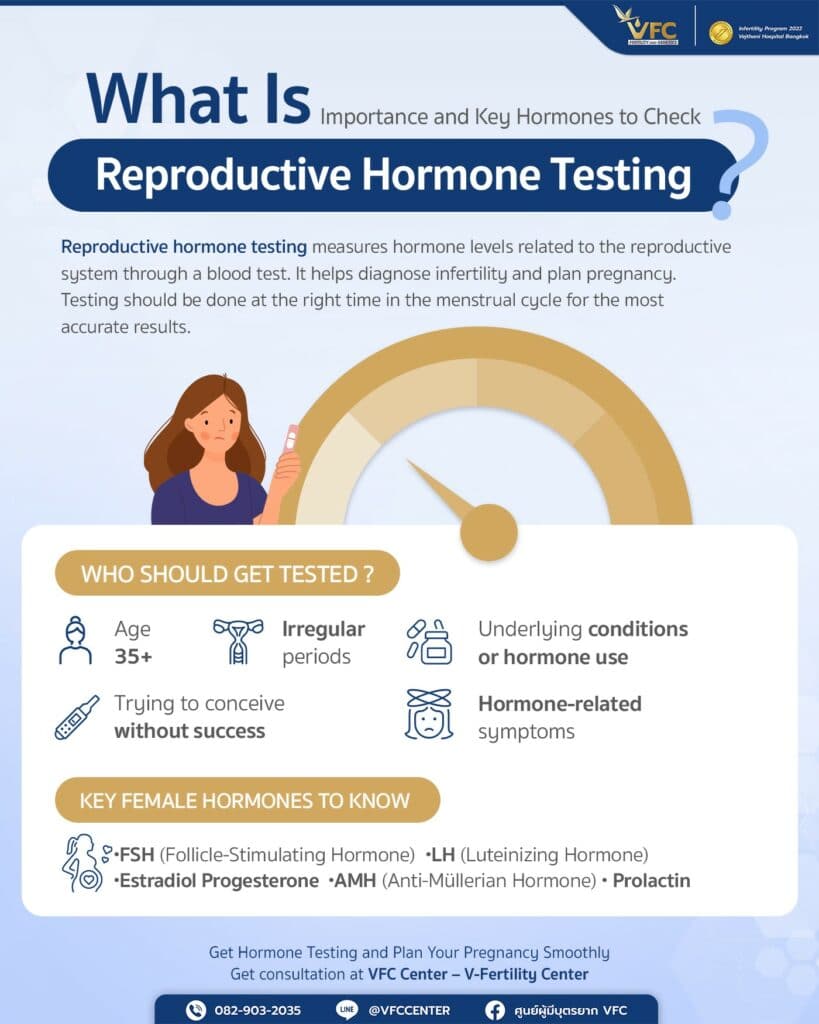
Reproductive hormone testing refers to measuring hormone levels related to the reproductive system to evaluate ovarian function, ovulation, endocrine activity, and uterine health. These hormone levels are essential for screening infertility, menstrual irregularities, and menopause, ultimately supporting effective pregnancy planning.
Importance of Hormone Testing
Female reproductive hormone testing is commonly used to assess fertility health and diagnose infertility conditions, such as ovulation disorders, uterine abnormalities, or other conditions affecting pregnancy. Hormonal imbalance can lead to infertility, irregular cycles, or unsuccessful pregnancies. Therefore, hormone testing is a key tool that helps doctors plan treatments effectively, such as ovulation induction, hormonal therapy, or personalized reproductive care strategies.
Key Hormones Women Should Know
- FSH (Follicle-Stimulating Hormone): Stimulates egg development in the ovaries. Normal levels are typically ≤10 mIU/mL
- LH (Luteinizing Hormone): Triggers ovulation. Normal levels range from 5-25 IU/L in reproductive-age women
- Estradiol (E2): Supports endometrial development and pregnancy preparation. Normal range is 30-400 pg/mL depending on cycle phase
- Progesterone: Prepares the uterus for embryo implantation. Normal levels are 5-20 ng/mL
- AMH (Anti-Müllerian Hormone): Reflects ovarian reserve. Typical levels for women aged 20-30 are 3.3-4.0 ng/mL
- Prolactin: Involved in milk production. Normal levels are 15-25 ng/mL
Book a reproductive hormone test and pregnancy planning at VFC Center
Who Should Get Hormone Testing
Reproductive hormone testing should be considered before planning pregnancy to support a smoother conception process, especially for:
- Women aged 35 and older, as age affects egg quality and ovarian reserve
- Individuals with irregular menstrual cycles
- Those trying to conceive naturally for more than 6-12 months without success
- Individuals with hormone-related symptoms such as rapid weight gain, mood changes, hot flashes, or severe PMS
- Those with underlying conditions or using hormonal medications
Steps in Reproductive Hormone Testing You Should Know
Hormone testing is typically performed through a blood test to measure reproductive hormone levels. Results are usually available within 1-3 days, after which doctors analyze them to develop a personalized pregnancy plan. Since menstrual cycle and hormones are closely related, testing must be timed appropriately for accurate results.
How to Ensure Accurate Hormone Test Results
- How to Ensure Accurate Hormone Test Results
- FSH, LH, Estradiol: Days 2-5 of the cycle
- Progesterone: Day 21 or about 7 days after ovulation
- AMH: Can be tested at any time
- Avoid hormonal medications or birth control before testing
- Avoid stress and intense exercise prior to testing
Consult a reproductive medicine specialist about hormone testing
How to Support Healthy Hormone Levels
If reproductive hormone test results are not optimal, lifestyle adjustments can help prepare for future testing and improve hormonal balance:
- Eat foods rich in phytoestrogens, such as soy, tofu, flaxseeds, leafy greens, and fruits
- Supplement with vitamins that support hormone balance, including B vitamins, vitamin D, magnesium, and zinc, as recommended by a doctor
- Engage in light exercise such as walking, yoga, Pilates, or swimming to support endocrine and circulatory systems
- Manage stress and maintain quality sleep (7-8 hours per night)
- Avoid endocrine disruptors such as BPA plastics, certain chemicals in cosmetics, and pesticides
If you are planning to conceive and want to assess ovarian function and reproductive health through reproductive hormone testing, you can receive expert guidance and personalized care from specialists at VFC Center (V Fertility Center), a trusted fertility center providing comprehensive support throughout your journey to parenthood.
Article by Dr. Worawat Siripoon
Contact or Book a Consultation:
VFC Center – V-Fertility Center
Hotline: 082-903-2035
LINE Official: @vfccenter
FAQs About Reproductive Hormone Testing
What if my hormone levels are normal but I still cannot conceive?
Additional factors may need evaluation, such as sperm quality, uterine condition, ovarian health, or fallopian tubes.
If my cycle is regular, do I still need hormone testing?
Yes. Regular cycles do not always reflect egg quality or hormone balance. Testing provides deeper insights.
How long should I wait after stopping birth control before testing?
Typically 1-3 cycles are recommended to allow hormones to return to natural levels.
Is one hormone test enough?
In some cases, repeat testing is needed to track changes or evaluate treatment outcomes.

OBSTETRICS AND GYNAECOLOGY-REPRODUCTIVE MEDICINE
No Comments
Sorry, the comment form is closed at this time.