





Key Takeaway: Measuring hCG hormone and Beta-hCG levels after embryo transfer is a crucial step in confirming pregnancy following IVF treatment. A Beta-hCG test helps determine whether the embryo has successfully implanted in the uterus, as hCG hormone levels begin to rise shortly after implantation and serve as a key indicator of early pregnancy. While an initial screening can be done using a home urine pregnancy test, blood testing with interpretation by a reproductive medicine specialist provides significantly greater accuracy. Repeating the hCG test after embryo transfer, approximately 48 hours later, further confirms whether Beta-hCG levels are increasing as expected.
In the IVF process, the period after embryo transfer into the uterus is one of the most delicate and emotionally challenging stages of infertility treatment. Many intended parents feel anxious while waiting for the outcome and often ask the same questions: “How many days until pregnancy can be confirmed?” and “When is the most accurate time to check hormones?”
Rather than letting stress affect your physical condition, understanding the role of the hCG hormone, what beta-hCG is, and the correct testing timeline can help you better understand your body and ease anxiety during the waiting period.
What are hCG and Beta-hCG?
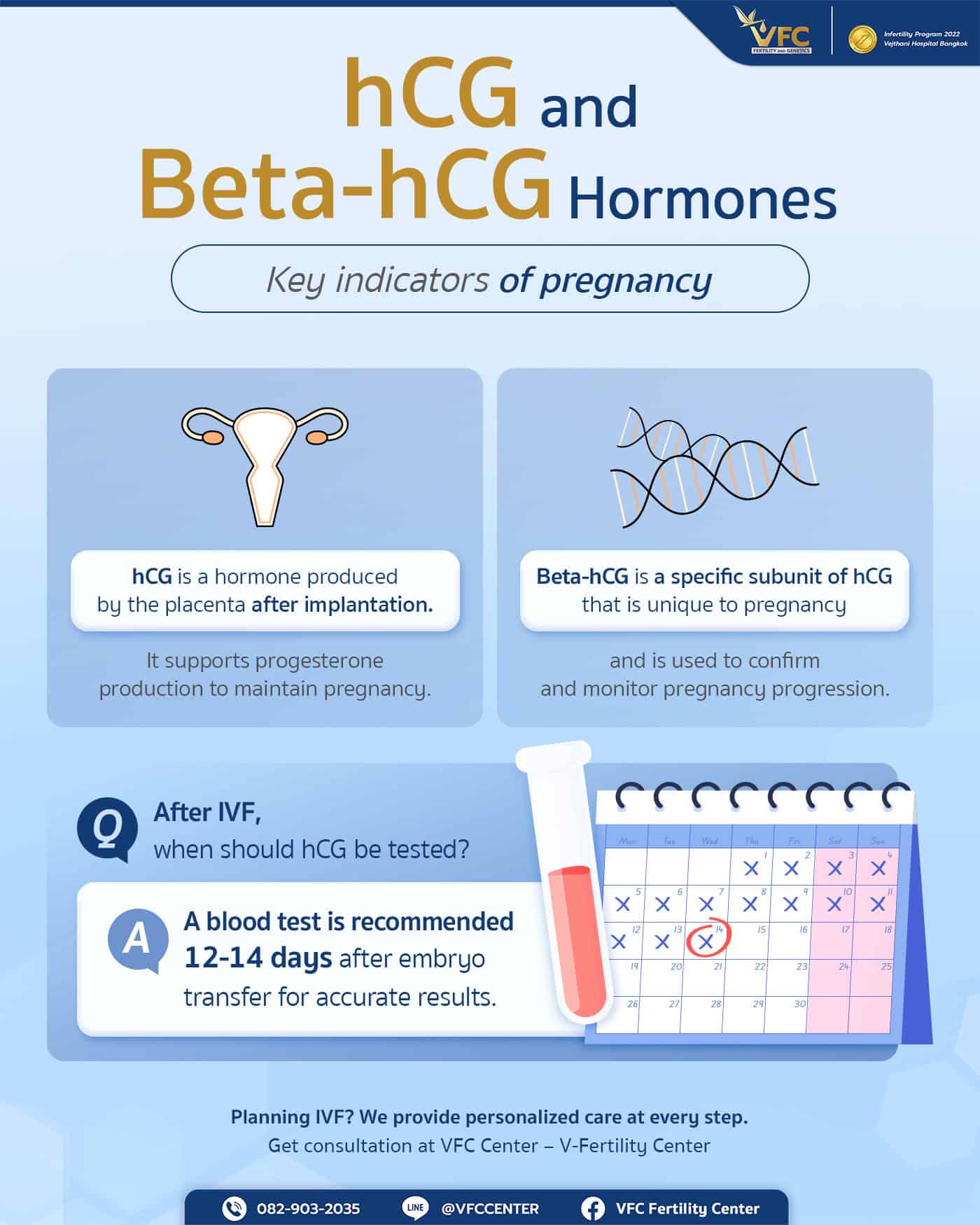
The hCG hormone (Human Chorionic Gonadotropin) is produced by the body after pregnancy begins. It is secreted by placental cells called syncytiotrophoblasts approximately 6-10 days after embryo implantation into the uterine lining. Its primary function is to stimulate the ovaries to produce progesterone, which helps thicken and maintain the uterine lining to support pregnancy.
Levels of hCG rise rapidly in early pregnancy, peak around weeks 8-12, and then gradually decline during the second trimester.
Beta-hCG is a specific subunit of the hCG hormone that is highly specific to pregnancy. Because of this specificity, Beta-hCG is the standard marker used by physicians to confirm pregnancy and to monitor pregnancy progression in infertility treatments.
Get expert guidance on hCG and pregnancy-related hormones at VFC Center
What Happens in the Female Body After Embryo Transfer
For patients undergoing IVF, once the embryo is transferred into the uterus, the female body begins a series of important hormonal and physiological changes that support pregnancy.
1. Embryo Movement and Implantation
After transfer, the embryo must implant into the uterine lining to initiate pregnancy. This process typically occurs within 6-10 days after embryo transfer.
2. Endometrial Response
Successful implantation stimulates the uterine lining to adapt, begin placental formation, and start producing hCG hormone to maintain a pregnancy-friendly environment.
3. Initiation of hCG Production
Once implantation occurs, hCG production begins, signaling the start of pregnancy. This hormone helps prevent shedding of the uterine lining, reducing the risk of miscarriage.
4. Hormonal Changes in the Body
Rising hCG hormone levels in early pregnancy can cause common symptoms such as:
- Nausea and vomiting, especially during the first trimester
- Breast tenderness and enlargement as the body prepares for breastfeeding
- Increased fatigue and low energy
- Mood changes, irritability, and emotional sensitivity
- More frequent urination
hCG Test After Embryo Transfer: How Many Days Until Pregnancy Is Confirmed?
This is one of the most common questions among couples undergoing IVF. After transferring a healthy embryo into the uterus, physicians generally recommend performing an hCG test after embryo transfer at 8–10 days.
At this stage, hCG levels are high enough to reliably confirm pregnancy. Testing earlier than recommended may lead to inaccurate results because hormone levels may still be too low to detect.
Methods for Testing hCG and Beta-hCG After Embryo Transfer
Testing hCG and Beta-hCG helps determine whether implantation has been successful. Common methods include:
- Urine pregnancy test: Convenient and quick, but less accurate in early stages if hCG levels are still low
- Blood test: The most accurate method for measuring hCG levels and confirming pregnancy
- Repeat testing: Measuring hCG again after 48 hours helps confirm an appropriate hormone increase, a positive sign of pregnancy
- Physician interpretation: hCG results should always be reviewed by a reproductive medicine specialist to ensure accurate diagnosis and appropriate next steps
Receive personalized IVF consultation with fertility specialists at VFC Center

Concerning hCG Hormone Results and How to Respond
After an hCG test following embryo transfer, certain results may require closer attention:
- Lower-than-expected hCG levels: May indicate failed implantation or a non-viable pregnancy. A repeat test after 48 hours is recommended
- Inadequate rise in hCG: Slow or insufficient increases may suggest abnormal pregnancy or ectopic pregnancy, requiring further evaluation
- Decreasing hCG levels: May indicate miscarriage and requires close medical monitoring
Accurate timing and professional interpretation are essential. Testing too early can cause unnecessary stress, while timely testing and continuous follow-up with a reproductive medicine specialist increase safety and confidence throughout pregnancy.
For couples planning fertility treatment, comprehensive preparation and accurate hormone monitoring are essential. At VFC Center (V-Fertility Center), we combine precise diagnostics, compassionate care, and advanced medical technology to support patients at every stage of their fertility journey. Our integrated services, including comprehensive infertility screening in Bangkok, help identify underlying factors early and guide personalized treatment plans with confidence and clarity.
Article by Dr. Worawat Siripoon
Contact or Book a Consultation:
VFC Center – V-Fertility Center
Hotline: 082-903-2035
LINE Official: @vfccenter
Frequently Asked Questions (FAQs)

OBSTETRICS AND GYNAECOLOGY-REPRODUCTIVE MEDICINE
No Comments
Sorry, the comment form is closed at this time.