






All parents-to-be share the same hope: to experience a smooth pregnancy and delivery, and to welcome a healthy baby from the very beginning. For individuals facing infertility, this journey often involves careful planning through assisted reproductive technologies such as IVF, which require emotional and physical dedication. Beyond preparing the body for treatment, one key way to reduce pregnancy complications and prevent congenital abnormalities is through embryo chromosome testing, especially the highly accurate SNP-based PGT-A.
What Is SNP-based PGT-A?
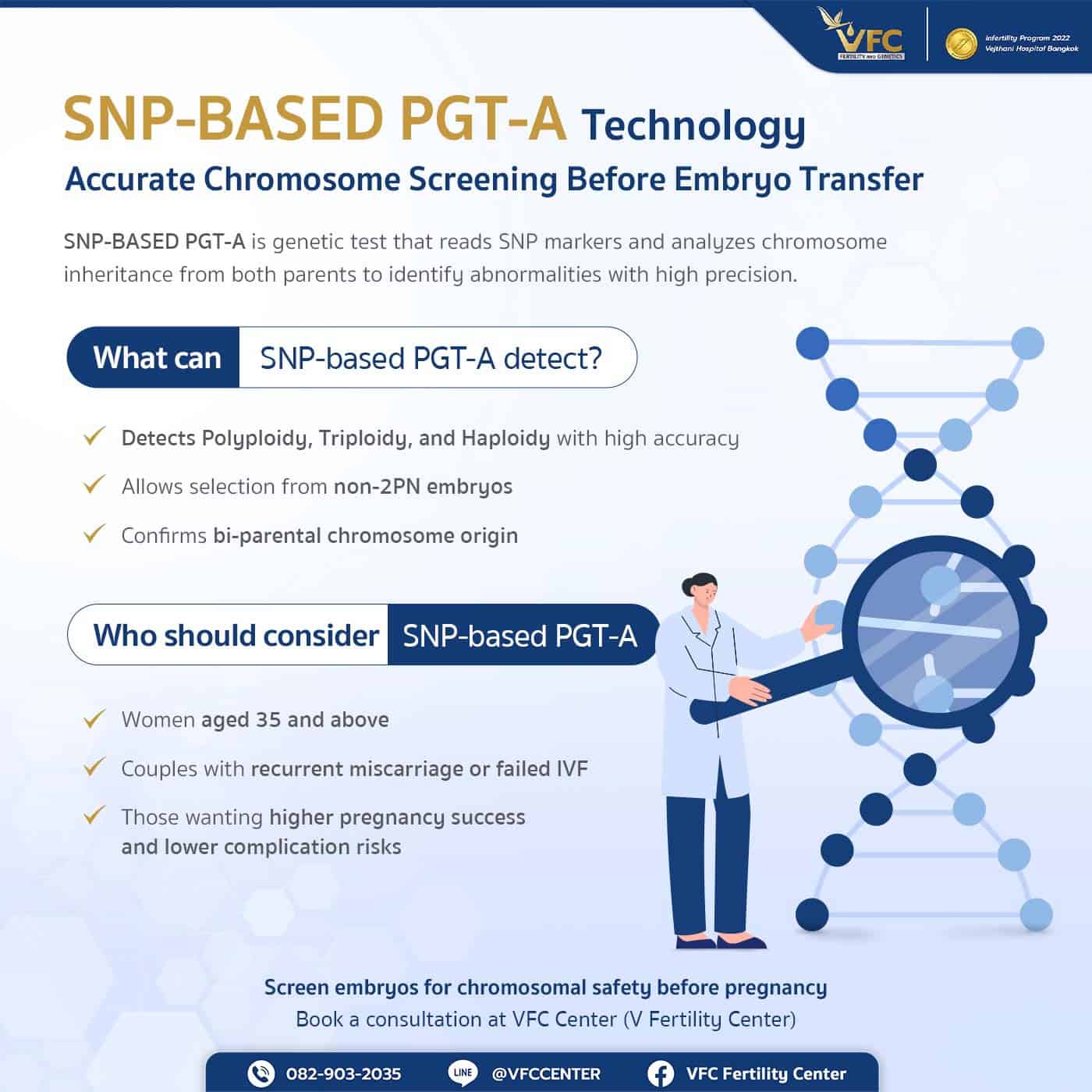
SNP-based PGT-A is a technique used to select embryos with a normal set of chromosomes before transferring them into the uterus, helping increase the success rate of pregnancy while reducing the risk of miscarriage or genetic abnormalities. This method focuses on deeper genetic analysis to identify the most suitable embryo for each couple.
Unlike conventional CNV-based testing, which measures DNA quantity and may miss complex abnormalities, SNP-based PGT-A analyzes genetic markers and inheritance patterns at a deeper level, offering clearer clinical interpretation and helping patients understand how many types of embryo chromosome testing are available and which option provides the highest accuracy.
Who Should Consider SNP-based PGT-A?
SNP-based PGT-A may be considered by couples who wish to reduce the risk of chromosomal abnormalities and improve embryo selection, particularly in the following situations:
- Women aged 35 years and older, as the risk of chromosomal abnormalities increases with maternal age
- Individuals with a history of recurrent pregnancy loss or repeated IVF failure
- Couples with a known family history of chromosomal abnormalities or genetic conditions, especially when combined PGT-M and PGT-A is indicated
- Patients who wish to improve embryo selection by identifying embryos with a normal chromosomal copy number, potentially reducing the risk of implantation failure or miscarriage
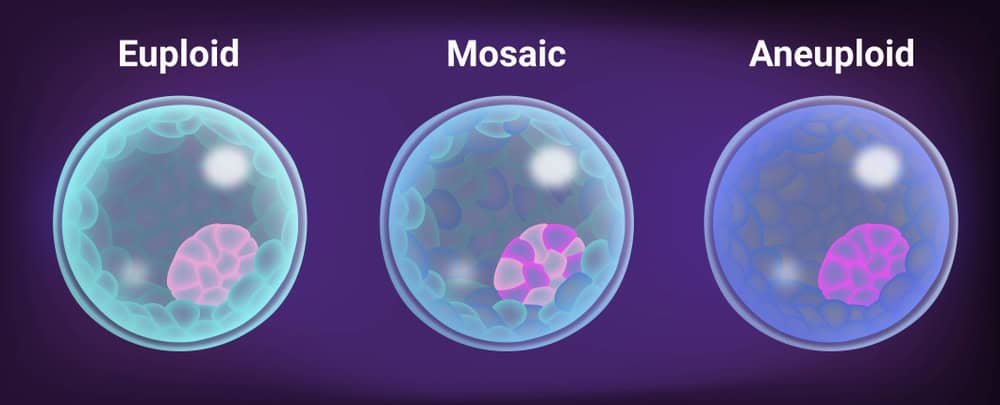
With the high accuracy of SNP-based PGT-A, specialists can identify embryos with normal chromosomes (euploid embryos), enhancing implantation rates and effectively reducing miscarriage risks.
Consult a reproductive medicine specialist about embryo chromosome testing
Why SNP-based PGT-A Matters
Following fertilization, each embryo carries unique genetic characteristics invisible to the eye. Even a minor chromosomal error can prevent implantation, cause miscarriage, or lead to congenital abnormalities. SNP-based PGT-A therefore plays a critical role in screening and selecting the healthiest embryos for a smoother pregnancy. Key benefits include:
1. Selecting Chromosomally Normal Embryos
SNP-based PGT-A can identify embryos with the normal 46 chromosomes and accurately detect polyploidy, triploidy, and haploidy. This helps eliminate embryos that cannot develop normally, allowing doctors to select only embryos with strong potential for implantation and healthy development.
2. Increasing Viable Embryo Options Beyond 2PN
In the laboratory, embryo assessment begins at the fertilization check by observing the number of pronuclei (PN):
- 2PN: One pronucleus from each parent; considered normal fertilization
- 0PN: No visible pronuclei; typically considered abnormal and not cultured further
- 1PN: Only one pronucleus; can occur for various reasons
- 3PN or more: Typically indicates triploidy or other chromosomal issues
In reality, not all 0PN or 1PN embryos are abnormal. Sometimes pronuclei are simply missed due to timing. Without genetic testing, these embryos may be discarded unnecessarily. SNP-based PGT-A helps determine whether these embryos are genetically normal, increasing the number of embryos available for transfer.
3. Supporting a Safer, More Successful Pregnancy
By identifying embryos with normal chromosomes and strong developmental potential, implantation rates improve significantly. This reduces miscarriage risk and decreases the likelihood of fetal abnormalities, giving couples greater confidence as they begin building their family.
The SNP-based PGT-A Process
To help couples better understand the procedure, here are the key steps involved:
- Trophectoderm biopsy: 5–10 cells are collected from the outer layer of a blastocyst without affecting embryo development
- DNA extraction and amplification
- Genetic sequencing using NGS (Next-Generation Sequencing) for high-resolution genome analysis
- Combined CNV and SNP analysis to determine chromosome normality
- Geneticists and reproductive endocrinologists review results together to select the best embryo for transfer
Ask about SNP-based PGT-A packages and pricing at VFC Center
What Makes SNP-based PGT-A Superior to Conventional PGT-A?
There are several types of embryo chromosome testing, and while conventional PGT-A effectively detects missing or extra chromosomes, SNP-based PGT-A provides deeper and more accurate results. By analyzing SNPs and parental chromosome inheritance patterns, it offers the following advantages:
- Confirms whether embryos come from both parents (bi-parental origin), preventing unnecessary discarding of 0PN or 1PN embryos and allowing them to be cultured to the blastocyst stage for testing
- Increases the number of embryos available for screening, improving the chances of finding a normal embryo
- Accurately identifies polyploidy, triploidy, and haploidy—conditions that affect fetal development
- Enables cohort checks to prevent sample mix-ups, ensuring embryo identity is fully verified
These features make SNP-based PGT-A more comprehensive and clinically valuable than standard methods.
| Comparison Category | PGT-A (CNV-based) | PGT-A (SNP-based) |
| Testing Principle | Measures DNA quantity to detect missing or extra chromosomes | Analyzes genetic code at the SNP level, including patterns of homozygosity |
| Ability to Detect Polyploidy / Triploidy / Haploidy | Detection is unclear and may be misinterpreted as normal | Can accurately detect polyploidy, triploidy, and haploidy |
| Assessment of Non-2PN Embryos (0PN / 1PN / 3PN) | Embryos are often discarded early because normality cannot be confirmed | Can determine whether fertilization is normal, increasing the number of embryos available for selection |
| Cohort Verification (Confirming All Embryos Belong to the Same Couple) | Cannot verify directly from genetic data | Can verify by comparing SNP patterns between father, mother, and embryos, reducing human error |
| DNA Contamination Detection | Very limited detection capability or may not detect contamination at all | Can reliably detect contamination due to unique genetic “fingerprints” confirming sample origin |
| Clinical Accuracy | Considered standard accuracy | Higher accuracy due to analyzing true chromosomal inheritance patterns rather than relying solely on DNA quantity |
| Best Suitability | Suitable for general cases | Ideal for patients who want to maximize the chance of selecting normal embryos, such as women aged ≥35, recurrent miscarriage, multiple failed IVF cycles |
Couples undergoing ICSI can feel more confident knowing their embryos are thoroughly evaluated for chromosomal health through SNP-based PGT-A and other embryo chromosome testing methods at VFC Center (V Fertility Center). As a leading provider of PGT testing services in Thailand, our reproductive medicine specialists deliver personalized care at every step, from biopsy and genetic analysis to embryo selection, to support the healthiest possible start to your pregnancy.
Article by Dr. Sorramon Songveeratham
Contact or Book a Consultation:
VFC Center – V-Fertility Center
Hotline: 082-903-2035
LINE Official: @vfccenter
Frequently Asked Questions (FAQs)
Q : Is SNP-based PGT-A necessary for every couple undergoing IVF?
A : Not necessarily. While it is not required for all patients, it is highly beneficial for women over age 35, individuals with recurrent miscarriage, or couples who have experienced failed embryo implantation. This test helps identify chromosomally normal embryos with the highest implantation potential, increasing success rates and reducing the risk of miscarriage.
Q : Does SNP-based PGT-A harm the embryo?
A : No. SNP-based PGT-A uses a safe biopsy technique that collects only 5-10 cells from the outer layer of a blastocyst (trophectoderm). This method is globally accepted and standardized, with an extremely low risk to embryo development when performed by experienced embryologists.
Q : How long does it take to receive results from SNP-based PGT-A?
A : Results typically take 7-14 days after embryo biopsy, depending on the laboratory workflow and the number of samples. Once the analysis is complete, your physician will schedule a consultation to review the results and plan your embryo transfer for the next cycle.
Q : What happens if an embryo is found to have chromosomal abnormalities?
A : If abnormalities are detected, your physician will assess how the specific issue may affect embryo development. For example, embryos with low-level mosaicism may still have implantation potential with careful monitoring, whereas embryos with severe abnormalities are usually not recommended for transfer. In such cases, using a chromosomally normal embryo is advised to ensure a safer and healthier pregnancy.

OBSTETRICS AND GYNAECOLOGY-REPRODUCTIVE MEDICINE
No Comments
Sorry, the comment form is closed at this time.