


Success With IVF: How You Can Get Pregnant With Low AMH Levels
Can you get pregnant with low AMH? Yes — but it requires the right strategy. A low level of AMH (Anti-Müllerian Hormone) often signals a reduced ovarian reserve, but it doesn’t mean pregnancy is impossible. Many women with low AMH have had success with IVF and targeted treatments.
The key lies in improving egg quality through personalized fertility plans, including supplements for low AMH like CoQ10, DHEA, and vitamin D. With the right support, lifestyle changes, and expert care from a fertility clinic, women with low AMH still have real chances of conceiving and carrying a healthy pregnancy.
Anti-Müllerian Hormone (AMH) is a protein hormone produced by cells in the ovarian follicles and is a crucial marker of the number and quality of a woman’s remaining eggs. A low AMH diagnosis can be concerning, as it indicates a diminished ovarian reserve. But it’s crucial to understand what this number truly means, and what it doesn’t.
While a low AMH level presents challenges, it’s not a final verdict on your ability to conceive. The key is moving beyond the low AMH diagnosis to a proactive, personalized strategy on how to improve egg quality. This guide will walk you through the practical steps and specific protocols, from targeted diet adjustments to advanced IVF options, that have helped many with low AMH have successful pregnancies.
Common Causes of Low AMH Levels
Understanding the underlying cause of low AMH levels can help in planning the appropriate fertility treatments and interventions to improve your chances of getting pregnant. Low AMH levels can be caused by several factors, such as:
Age: As a woman ages, her ovarian reserve naturally declines, leading to lower AMH levels. This is a normal part of the aging process.
Genetics: Some women are genetically predisposed to have a lower ovarian reserve, which can result in lower AMH levels.
Medical conditions: Certain medical conditions, such as endometriosis and autoimmune disorders, can affect AMH levels.
Lifestyle factors: Smoking, poor diet, and high-stress levels can negatively impact ovarian reserve and lower AMH levels.
Surgical interventions: Surgeries involving the ovaries, such as cyst removal or treatment for endometriosis, can reduce ovarian reserve and subsequently cause low AMH levels.
Chemotherapy and radiation: Cancer treatments can damage the ovaries and significantly reduce ovarian reserve, leading to low AMH levels.
Premature ovarian insufficiency (POI): Also known as premature ovarian failure, POI is a condition where the ovaries stop functioning normally before the age of 40, often resulting in low AMH levels.
The Link Between AMH and Fertility
AMH is directly linked to fertility. Higher AMH levels generally indicate more available eggs, suggesting a higher chance of pregnancy. Alternatively, low AMH levels, often referred to as low ovarian reserve, can be a challenge for women trying to conceive.
How Are AMH Levels Measured?
AMH levels can be measured through a blood test and are typically classified as high, normal, or low. These levels help in understanding your reproductive health. Generally, AMH levels are interpreted as follows:
- High AMH Levels: Usually above 3.0 ng/mL. While this might suggest a high ovarian reserve, extremely high levels are sometimes associated with conditions like Polycystic Ovary Syndrome (PCOS), which can impact fertility.
- Normal AMH Levels: This level typically ranges from 1.0 to 3.0 ng/mL. This range is often considered a good AMH level for IVF as it suggests a healthy ovarian reserve.
- Low AMH Levels: Levels below 1.0 ng/mL may indicate a diminished ovarian reserve. While lower AMH levels can present challenges in IVF, successful pregnancies can still occur.

Understanding AMH Test Results
AMH test results help evaluate your fertility health. A result is considered ‘normal’ based on age-specific AMH levels. For instance, a good AMH level for an IVF procedure might differ from what’s considered normal for natural conception. AMH is just one indicator of fertility and doesn’t give a complete picture on its own. There are other crucial factors, such as the quality of the eggs and overall reproductive health. Fertility specialists will consider AMH levels alongside other tests and personal factors to determine the best approach for fertility treatments.
Getting Pregnant With Low AMH
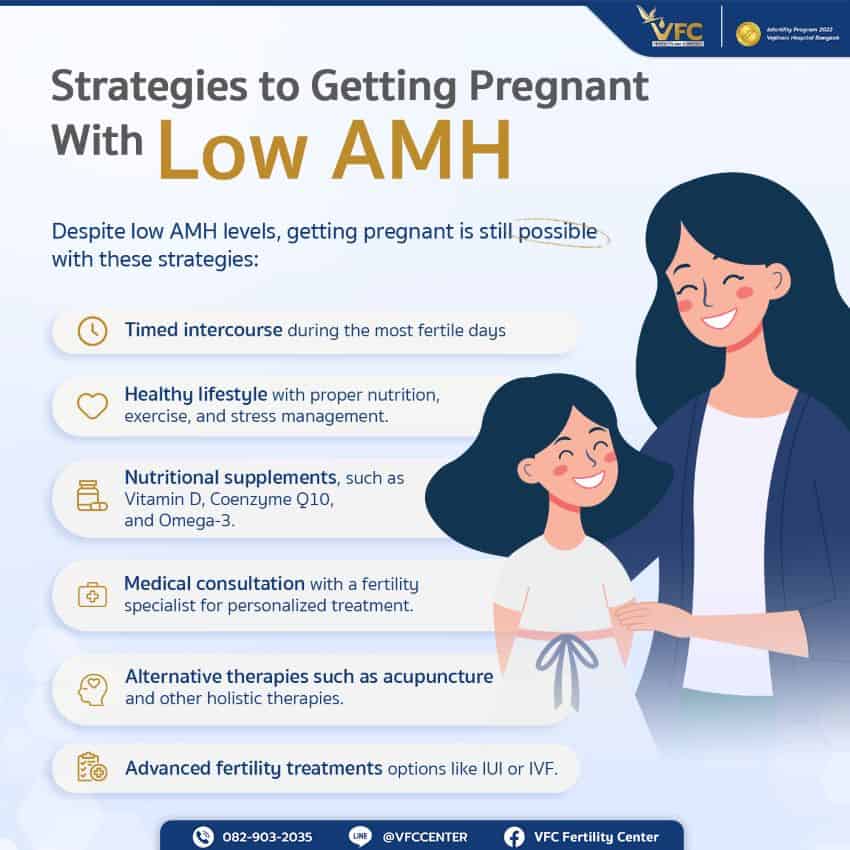
Can you get pregnant with low AMH? Despite low AMH levels, getting pregnant is still possible. Here are some strategies to consider:
- Timed intercourse: Understanding your menstrual cycle and timing intercourse during the most fertile days increases the chances of pregnancy with low AMH.
- Lifestyle adjustments: A healthy lifestyle involving proper nutrition, exercise, and stress management can positively influence fertility. Nutritional supplements for low AMH may also be recommended.
- Medical consultation: It’s essential to consult a fertility specialist. They can provide personalized advice on how to increase low AMH levels and improve egg quality, as well as offer treatment options based on your specific circumstances.
- Alternative therapies: Acupuncture and other holistic therapies have shown potential in improving fertility.
- Fertility treatments: Options like Intrauterine Insemination (IUI) or IVF might be recommended. The IVF protocol is particularly effective, with success cases for individuals with low AMH, as it allows for the direct fertilization of the egg outside the body.
What Does a Personalized Low AMH Protocol Look Like?
It’s important to note that every patient’s journey is unique, and what works for one may not work for another. At V Fertility Clinic, treatment for low AMH levels is based on the patient’s age, medical history, and specific goals. We develop individualized low AMH treatment strategies for optimal results, such as:
Scenario 1: Women Under 35 with Low AMH
- Women under 35 may have diminished ovarian reserve, but their egg quality is often still high.
- Minimal stimulation IVF (mini IVF) to gently stimulate the ovaries. The goal is to retrieve a few high-quality eggs.
- For those with regular cycles and no other fertility barriers, less invasive methods may be appropriate in the early stages. We track ovulation closely to optimize the timing of conception attempts, either naturally or with assistance (timed intercourse or IUI).
- Nutritional counseling with tailored diet plans rich in antioxidants, healthy fats, and essential vitamins to support hormonal balance is provided.
- Fertility supplements such as CoQ10, DHEA, folate, and vitamin D can be recommended to improve mitochondrial function and egg maturation.
Scenario 2: Woman Over 38 with Low AMH
- After age 38, egg quality naturally declines, and a low AMH level compounds the challenge. Here, the focus shifts to retrieving viable eggs quickly and efficiently.
- High-dose stimulation antagonist or microdose flare protocols are used to aggressively recruit as many follicles as possible in a single cycle.
- Dual stimulation (DuoStim) may be beneficial for some patients, involving two retrievals in one menstrual cycle (one in the follicular phase and another in the luteal phase).
- Advanced options such as Preimplantation genetic testing (PGT-A) can be used to identify chromosomally normal embryos to increase implantation chances and reduce miscarriage risk.
Scenario 3: Poor Egg Quality (Regardless of Age)
- Not all low AMH cases are about egg count. For some, the primary concern is egg quality, which can impact embryo development, implantation, and miscarriage risk. This scenario can affect both younger and older women.
- Adjunctive medications, such as Omnitrope (recombinant human growth hormone), may be used to improve oocyte and embryo quality in poor responders.
- Testosterone priming can be used to increase antral follicle count and follicle sensitivity to stimulation in select patients.
- PRP (Platelet-Rich Plasma) ovarian rejuvenation, where platelet-derived growth factors are injected into the ovaries to stimulate follicular activity, is a promising option.
IVF with ICSI (Intracytoplasmic Sperm Injection), another option involving direct injection of a single sperm into each egg, can improve fertilization rates when egg quality is low.
How to Improve Egg Quality and Increase Low AMH Levels
Here are practical tips on how to improve egg quality with low AMH levels:
- Eat a nutritious diet rich in antioxidants, vitamins, and minerals. Prioritize leafy greens, nuts, seeds, and whole grains.
- Consider supplements for low AMH, such as Vitamin D, Coenzyme Q10, and Omega-3 fatty acids, which may improve egg quality and ovarian health.
- CoQ10: Supports mitochondrial health and egg development.
- Vitamin D: Essential for hormonal balance and ovarian function.
- DHEA: Often recommended in small doses to support follicle development.
- Omega-3 Fatty Acids: Found in fatty fish or flaxseeds, they may aid in hormone regulation.
- Antioxidants: Reduce oxidative stress that may harm eggs
- Exercise regularly to improve overall well-being, which is linked to better fertility outcomes.
- Sleep 7 to 8 hours a night and manage stress with yoga, meditation, or mindfulness, which can help maintain hormonal balance.
- Reduce exposure to toxins and limit contact with environmental toxins, like BPA found in plastics, cosmetics, and non-organic produce.
- Avoid smoking and alcohol, which can reduce egg quality and interfere with hormonal balance.
Foods That Can Help You Increase AMH Levels
A well-balanced diet rich in specific nutrients can play a vital role in supporting ovarian health and hormonal balance. Incorporating a variety of nutrient-dense foods can help boost overall reproductive health. Here are some potential foods that can help you increase AMH levels:
- Leafy greens: Spinach, kale, and Swiss chard are packed with folate, iron, and antioxidants, all crucial for reproductive health.
- Nuts and seeds: Almonds, walnuts, flaxseeds, and chia seeds provide a healthy dose of fats and vitamin E, which are important for hormone regulation and egg quality.
- Whole Grains: Quinoa, brown rice, and oats are high in fiber and essential nutrients, which promotes overall well-being and potentially improves fertility.
- Berries: Blueberries, strawberries, and raspberries are antioxidant and vitamin powerhouses that support healthy cell function.
- Fish: Salmon, mackerel, and sardines are rich in Omega-3 fatty acids, which have been linked to improved egg quality and sperm health.
- Legumes: Lentils, chickpeas, and black beans are excellent sources of plant-based protein and iron, both vital for overall health and fertility.
- Eggs: Eggs are a good source of protein and essential nutrients like vitamin D, and they contribute to hormonal balance and fetal development.
- Citrus fruits: Oranges, grapefruits, and lemons are loaded with vitamin C and antioxidants, which can help improve sperm quality and protect against cell damage.
- Avocados: Rich in healthy fats and vitamin E, avocados can support hormonal regulation and improve egg quality.
- Dark chocolate: In moderation, dark chocolate can be a beneficial addition to your diet. It contains antioxidants that may boost overall health.
IVF Protocol for Pregnancy Success With Low AMH

If you have low AMH levels and are struggling to conceive, it is important to consult a specialist at a fertility clinic. Seeking medical advice early can provide the best treatment options and increase the chances of a successful pregnancy.
For those with low AMH considering IVF, tailored protocols exist. These may include high-dose stimulation using higher doses of fertility drugs to stimulate the ovaries. You can opt to follow the natural cycle for IVF by leveraging the body’s natural cycle with minimal medication. Another option is to have pre-treatment with supplements to improve ovarian response.
Increase Your AMH Levels with the Experts at V Fertility Center
In Bangkok, Thailand, V Fertility Center is a premier destination for couples facing fertility challenges, including those with low AMH levels. If you are wondering whether you can get pregnant with low AMH levels, our specialist team is equipped with state-of-the-art technology and follows the latest IVF protocols for low AMH.
Our JCI-accredited center adheres to the highest healthcare quality and safety standards and provides personalized care. We understand the emotional and physical journey of couples undergoing fertility treatments with the aim of getting pregnant with low AMH or exploring other fertility solutions. VFC’s expert team is committed to helping couples achieve their dream of parenthood. Contact us today.

สูตินรีแพทย์เฉพาะทางด้านเวชศาสตร์การเจริญพันธุ์
OBSTETRICS AND GYNAECOLOGY-REPRODUCTIVE MEDICINE
No Comments
Sorry, the comment form is closed at this time.