




Key Takeaway :
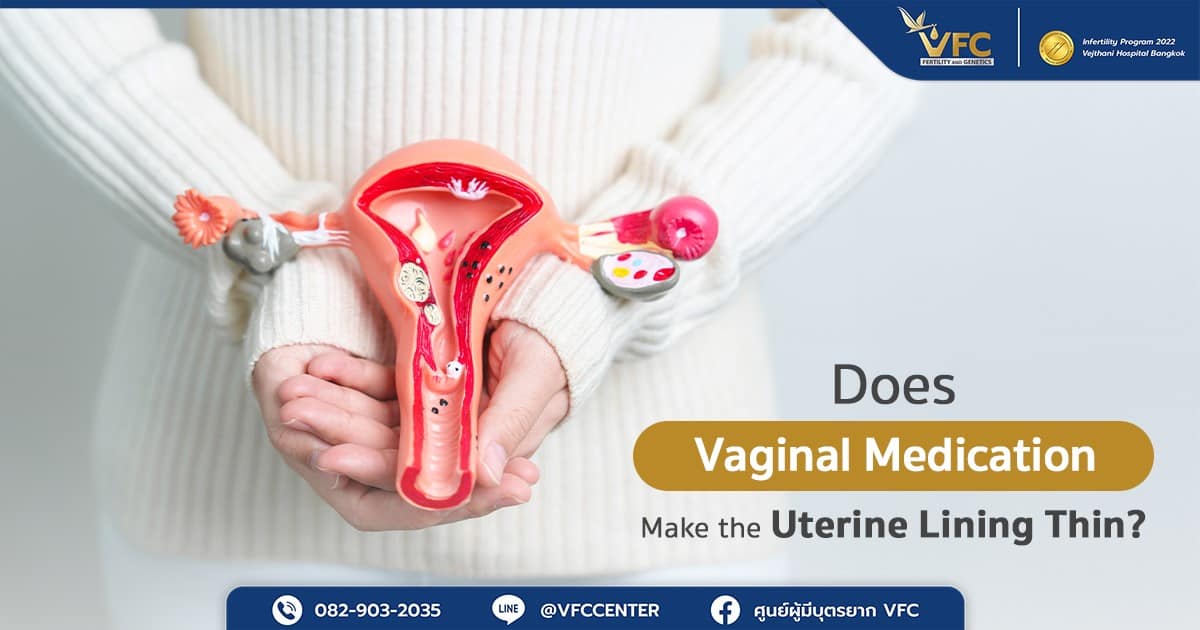
A thin uterine lining after using vaginal medication to prepare the uterine lining may occur due to normal biological mechanisms in which the tissue becomes denser in preparation for embryo implantation. It can also be influenced by individual factors such as hormone resistance or poor uterine blood circulation. Importantly, this does not always indicate treatment failure.
Identifying the true cause through proper medical evaluation, along with targeted treatment and advanced reproductive technologies, can help address problems after embryo transfer and significantly improve the chances of achieving a successful pregnancy.
Even when patients carefully follow the prescribed steps for using vaginal medication to prepare the uterine lining, some individuals undergoing infertility treatment may still find that their uterine lining does not thicken as expected – or may even develop a thin uterine lining by the time of their follow-up examination. However, this situation does not always indicate treatment failure. Instead, it may signal underlying individual factors that require deeper medical evaluation so the treatment plan can be adjusted more appropriately.
Understanding Thin Uterine Lining and Uterine Preparation Medication
Preparing the uterine lining for embryo implantation depends on the coordinated action of two key hormones: estrogen and progesterone. Estrogen stimulates endometrial cells to grow and thicken, while progesterone helps transform the uterine lining into a receptive environment that supports embryo implantation.
Consult fertility specialists about infertility treatment at VFC Center (V-Fertility Center)
Optimal Endometrial Thickness for Embryo Implantation
In clinical practice, the uterine lining considered optimal for embryo transfer typically measures 8-12 millimeters in thickness and shows a clear trilaminar (three-layer) pattern on ultrasound imaging, which indicates a healthy and receptive endometrium.
When the thickness is below 7 millimeters, it is classified as a thin uterine lining, which may reduce the chances of successful embryo implantation and potentially contribute to problems after embryo transfer.
The Role of Hormonal Vaginal Medication in Uterine Preparation
A common misconception is that all hormonal medications are designed only to “increase thickness”. In reality, many forms of vaginal medication to prepare the uterine lining contain progesterone, which is typically administered during the later stage of endometrial preparation.
Progesterone works by stopping further cell proliferation and transforming the uterine lining into a more compact and receptive structure for embryo implantation. In some cases, this process can be compared to stretching fabric tightly – the tissue becomes denser, which may cause the lining to appear thinner in certain areas on imaging.
Therefore, when the uterine lining is measured after progesterone has already been started, it may appear slightly thinner due to increased tissue density. This can be a normal physiological response. However, if thinning occurs during the estrogen phase of preparation or falls significantly below the normal threshold, physicians may suspect an underlying abnormality that requires further investigation.
Why Can the Uterine Lining Still Become Thin After Medication ?
If normal tissue compaction is ruled out, cases where the uterine lining does not respond to treatment, or becomes abnormally thin, are often linked to underlying medical conditions, such as the following:
1. Hormonal Receptor Insensitivity
The endometrial lining contains hormone receptors that respond to estrogen and progesterone signals. If these receptors are reduced in number or function abnormally, the cells may not respond effectively, even when vaginal medication to prepare the uterine lining or hormonal therapy is given in sufficient doses. As a result, the endometrial cells may fail to proliferate properly, leading to a thin uterine lining.
2. Poor Blood Circulation and the Effects of Stress
The small blood vessels supplying the uterus play a critical role in delivering nutrients and hormones necessary for implantation. When blood circulation is impaired, due to chronic stress, insufficient rest, or vascular constriction, the uterus may receive inadequate blood flow.
Stress hormones can cause blood vessels to constrict, limiting oxygen and nutrient supply to the endometrium. This can prevent the lining from growing properly, even with hormonal support.
3. Hidden Uterine Adhesions (Asherman’s Syndrome)
A history of uterine curettage, intrauterine surgery, or chronic infection may lead to the formation of uterine adhesions, also known as Asherman’s Syndrome. These adhesions reduce the available surface area for endometrial growth, which can result in a persistently thin uterine lining.
In such cases, hormonal medication alone may not be sufficient to resolve the condition, as the issue is caused by a structural abnormality inside the uterine cavity.
Potential Risks and Problems After Embryo Transfer to Monitor
Proceeding with embryo transfer when the uterine lining is not fully prepared or does not meet the optimal thickness criteria may lead to problems after embryo transfer. This situation can also place emotional stress on patients undergoing fertility treatment.
Risks of Proceeding With Embryo Transfer When the Uterine Lining Is Not Ready
When the lining is too thin, it may lack sufficient blood vessels to nourish the embryo. This can lead to implantation failure, where the embryo does not attach to the uterus. In cases where implantation does occur, there may still be an increased risk of early miscarriage or pregnancy complications later on, such as placenta previa or abnormal placental attachment.
Warning Signs That Require Immediate Medical Attention
During uterine preparation or after embryo transfer, certain symptoms should prompt immediate consultation with a doctor. These include:
- Spotting or unexpected vaginal bleeding
- Unusual lower abdominal pain
- Changes in vaginal discharge
These symptoms may indicate infection or hormonal imbalance and require prompt medical evaluation and treatment.
Treatment Approaches and Technologies to Improve Uterine Lining Thickness
Once physicians determine the underlying cause of a thin uterine lining, the next step is to develop an individualized treatment plan. Treatment is not limited to simply increasing the dosage of vaginal medication to prepare the uterine lining. Instead, physicians may combine multiple therapeutic strategies and advanced technologies to restore the uterine environment and improve the chances of successful embryo implantation.

Personalized Hormone Protocol
Doctors may adjust the hormone delivery method depending on the patient’s response. Instead of relying solely on oral medication or vaginal medication to prepare the uterine lining, treatment may include transdermal hormone patches or injectable hormones.
This approach helps prevent the medication from being altered or broken down by the liver or digestive system before entering the bloodstream. As a result, hormone levels in the blood can remain more stable and effective, supporting the growth of the uterine lining.
Platelet-Rich Plasma (PRP) Therapy for Tissue Regeneration
Platelet-Rich Plasma (PRP) therapy involves drawing a small sample of the patient’s blood and processing it to concentrate platelets that are rich in growth factors. The concentrated plasma is then injected into the uterine cavity.
These growth factors stimulate the formation of new blood vessels and promote endometrial cell growth, helping increase uterine quality and lining thickness, especially in patients who do not respond well to conventional hormone therapy.
Advanced Diagnosis With Hysteroscopy
When uterine adhesions or polyps are suspected, hysteroscopy is considered one of the most accurate diagnostic tools. This procedure allows doctors to directly visualize the uterine cavity and remove adhesions that may prevent proper endometrial growth.
By restoring the uterine environment, hysteroscopy can help the endometrium recover and become more receptive to embryo implantation.
Consult fertility specialists about infertility treatment at VFC Center (V-Fertility Center)
Preparing for Motherhood With Precision Care at VFC Center
A thin uterine lining is not the end of hope – it is simply a clinical challenge that requires precise diagnosis and personalized treatment.
At VFC Center (V-Fertility Center), a leading ICSI clinic Bangkok, our team of reproductive medicine specialists works with advanced laboratory technology to design individualized treatment plans. We carefully analyze the underlying causes of poor medication response and select the most appropriate medical innovations to restore uterine health and improve the chances of a successful pregnancy.
Article by Dr. Sorramon Songveeratham
Contact or Book a Consultation:
VFC Center – V-Fertility Center
Hotline: 082-903-2035
LINE Official: @vfccenter
FAQs About Vaginal Medication and Thin Uterine Lining
What foods can help support uterine lining health along with medication ?
Focus on foods rich in protein and vitamin E-such as nuts and avocados-as well as antioxidant-rich foods like berries. Drinking enough water is also important, as it helps improve blood circulation to the uterus and may support uterine lining health.
If the uterine lining is very thin, is pregnancy still possible ?
Although a thin uterine lining may reduce the chances of embryo implantation, modern fertility treatments-such as PRP injections and personalized hormone protocols using vaginal medication to prepare the uterine lining-can help improve both thickness and endometrial quality. Many patients have successfully achieved pregnancy after receiving these treatments.
Is breast tenderness after using vaginal medication normal ?
Yes. Breast tenderness is a common side effect of progesterone therapy. It indicates that the body is responding to the hormone, although it does not confirm pregnancy or treatment success on its own.

OBSTETRICS AND GYNAECOLOGY-REPRODUCTIVE MEDICINE
No Comments
Sorry, the comment form is closed at this time.