




Key Takeaways
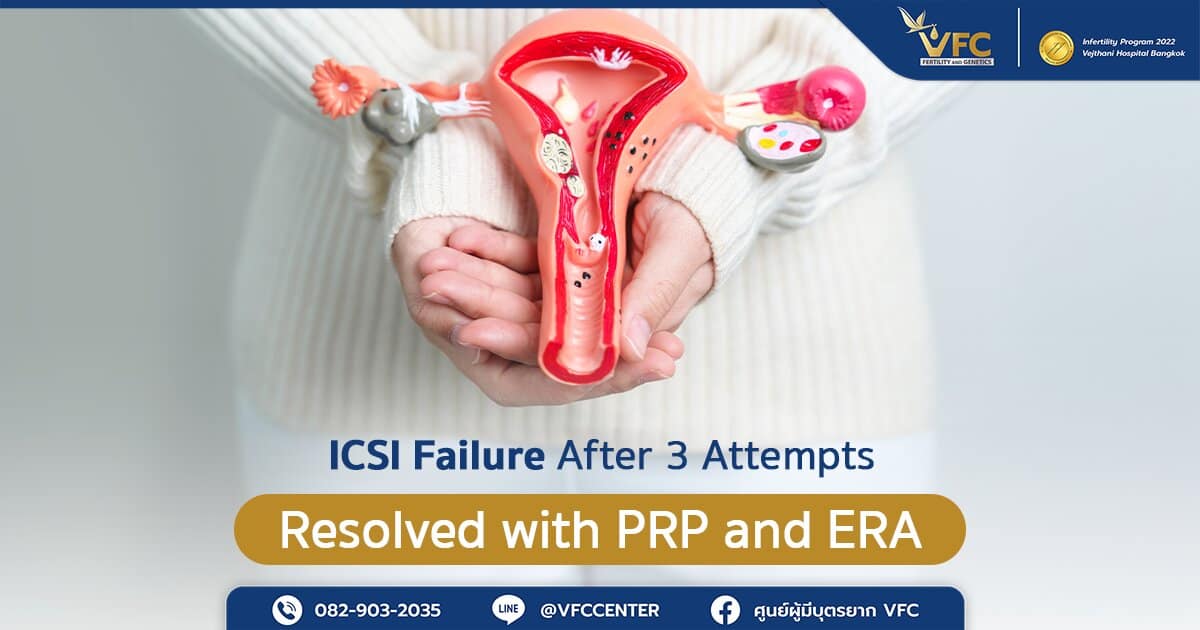
Many couples who have undergone multiple unsuccessful IVF or ICSI cycles often face both physical and emotional challenges. However, advanced technologies, such as Ovarian PRP injections and ERA Testing at the VFC Center (V-Fertility Center), can effectively help restore ovarian function and improve the chances of conception. Additionally, evaluating the uterine lining and utilizing Precision Medicine can significantly enhance the success rate of embryo implantation.
For many couples, the journey toward parenthood can involve significant obstacles, especially after repeated unsuccessful IVF or ICSI cycles. Recurrent ICSI failure can create emotional stress and uncertainty, as experienced by Yok and Nock, who had previously undergone two ICSI treatments at another clinic without success.
When they decided to consult specialists at VFC Center (V-Fertility Center), they began a new treatment plan under the close supervision of Dr. Worawat Siripun. With a precision-based treatment strategy and ovarian restoration approach, their journey continued despite the challenge of traveling from Nakhon Ratchasima to Bangkok for every appointment. Their perseverance and trust in the medical team eventually led to a successful outcome in overcoming infertility.
Attending: Dr. Worawat Siripun
Ovarian Evaluation and Rejuvenation
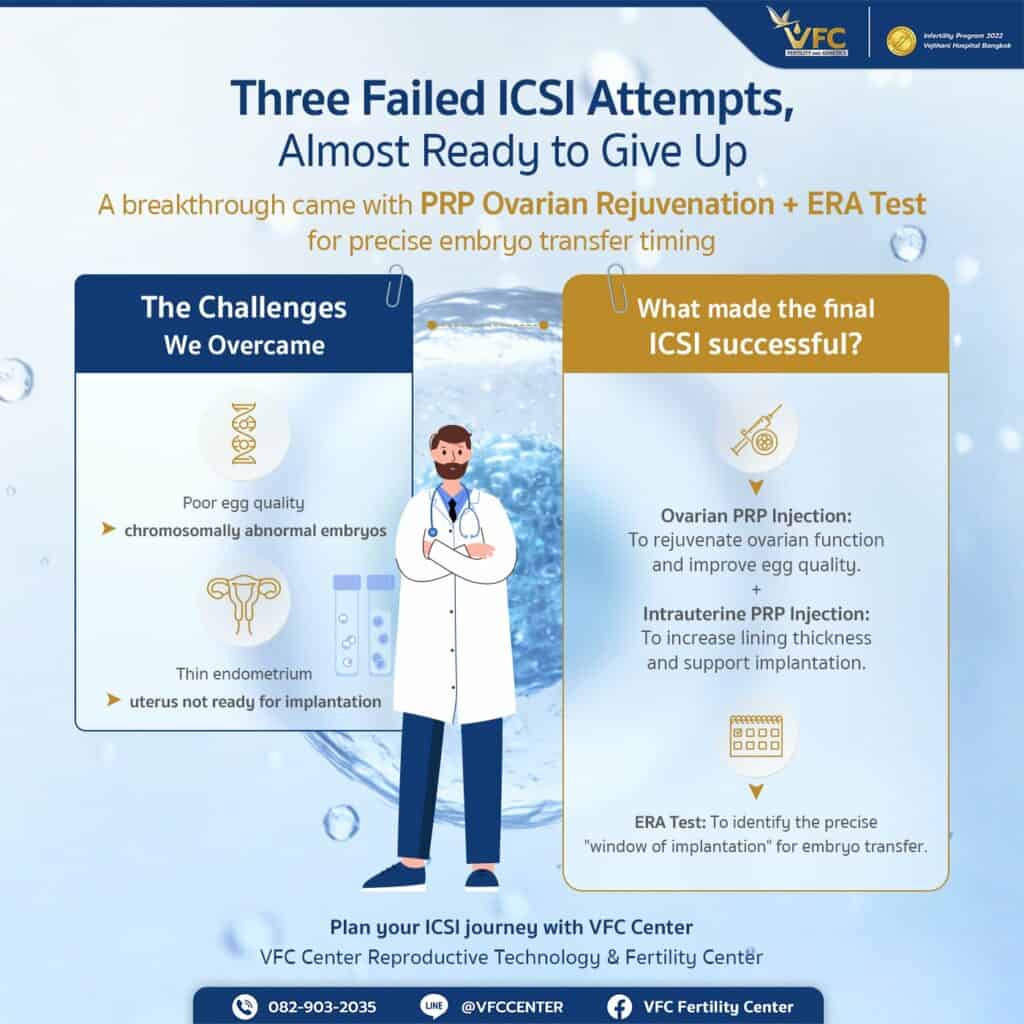
During the first ICSI cycle performed at VFC Center, ovarian stimulation initially produced promising results. However, when the embryos underwent chromosomal screening, all embryos were found to be aneuploid, meaning they carried abnormal chromosomes. This condition is a major cause of ICSI failure, as abnormal embryos are unlikely to implant successfully.
Innovative Ovarian PRP Injection
To address the root cause, Dr. Worawat recommended an Ovarian PRP injection (Platelet-Rich Plasma therapy). This technique uses the patient’s own concentrated platelets, which contain high levels of growth factors, and injects them directly into the ovaries to stimulate tissue regeneration and improve egg quality.
After the Ovarian PRP injection, patients typically wait for approximately one to two menstrual cycles to allow the regenerative effects to take place before proceeding with the next fertility treatment cycle.
Results After Ovarian Rejuvenation
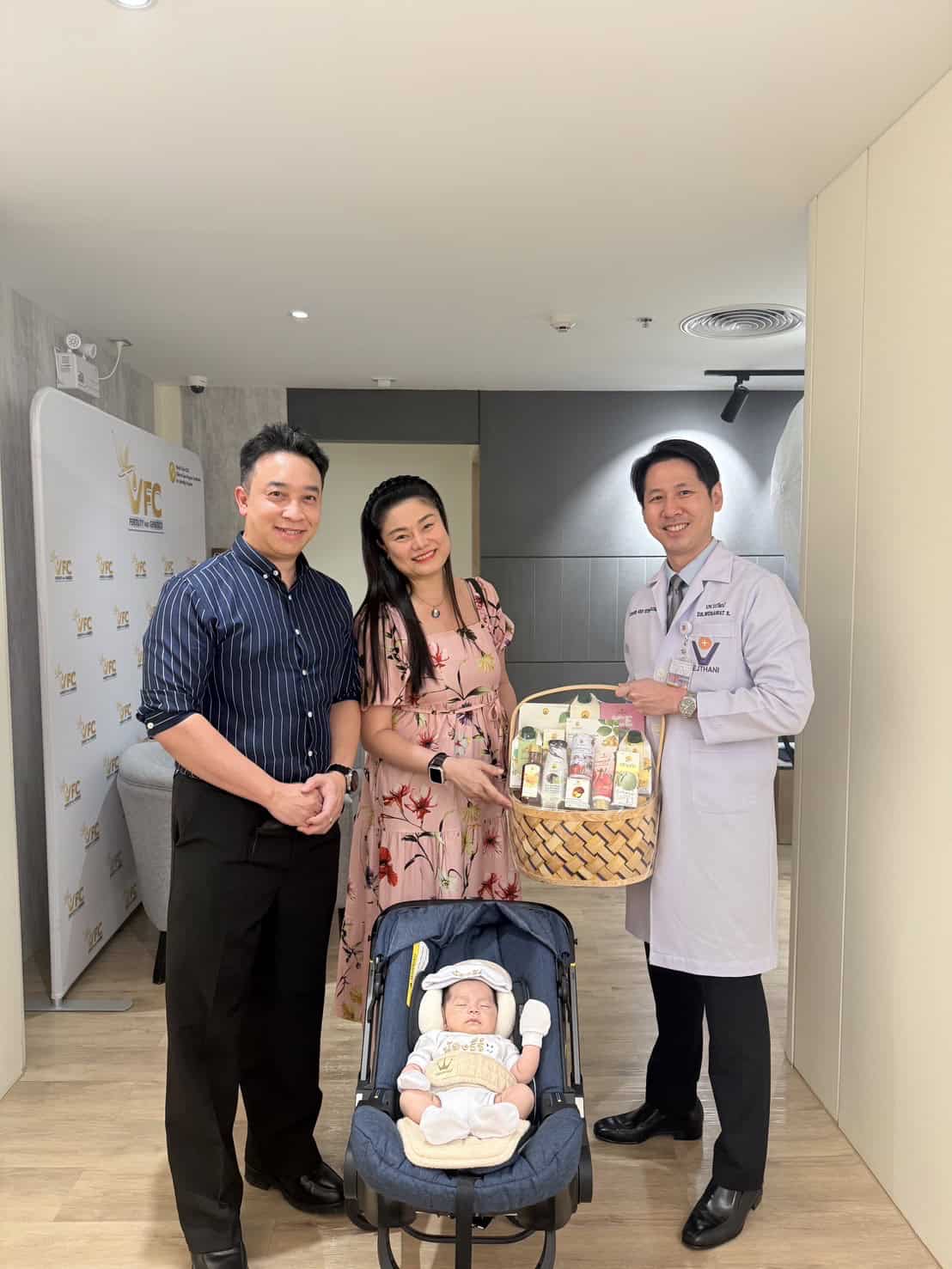
After three total treatment cycles at the VFC Center, Yok was able to obtain only one viable embryo with normal chromosomes. With only a single embryo remaining, the next step required extremely careful planning to maximize the chances of successful implantation.
Schedule a consultation with a reproductive medicine specialist to evaluate infertility conditions.
Endometrial Preparation and Optimization
Before transferring the only remaining embryo, the medical team prioritized a comprehensive evaluation of the uterine environment to minimize the risk of embryo loss.
Repeat Hysteroscopy
Although Yok had previously undergone hysteroscopy earlier in her treatment journey, more than one year had passed before the planned embryo transfer. Dr. Worawat recommended repeating the procedure to reassess the uterine cavity.
During the examination, a newly developed uterine polyp was discovered. If left untreated, this growth could significantly interfere with embryo implantation. The polyp was therefore removed to optimize the uterine environment.
Thin Endometrium and the PRP Solution
Another major challenge was a thin endometrium, a condition in which the uterine lining does not reach the optimal thickness required for embryo implantation.
The medical team attempted endometrial preparation for embryo transfer twice, but the uterine lining remained below the recommended thickness. During the third preparation cycle, the physician introduced PRP therapy directly into the uterine lining to stimulate new tissue growth.
This treatment helped regenerate the endometrial lining and increase its thickness until it became suitable for embryo implantation.
Using Precision Medicine to Identify the Implantation Window
In cases where only one normal embryo remains, performing embryo transfer at a standard time carries a significant risk. To increase the chance of success, Dr. Worawat applied Precision Medicine technologies, including
- ERA Test (Endometrial Receptivity Analysis): This test analyzes gene expression in the uterine lining to determine the exact window when the endometrium is most receptive to embryo implantation.
- Reducing the risk of embryo loss: ERA testing allows physicians to identify the precise timing for embryo transfer, reducing the risk of implantation failure caused by transferring embryos outside the optimal implantation window.
Schedule a consultation with a reproductive medicine specialist to evaluate infertility conditions.
Plan Your Fertility Journey with Confidence at VFC Center
If you have experienced unsuccessful ICSI cycles or face other fertility challenges, the experienced fertility specialists at VFC Center (V-Fertility Center) are ready to support you from day one. We offer cutting-edge treatments, such as PRP Ovarian Rejuvenation alongside ERA Testing in Bangkok, to ensure the highest precision in your ICSI treatment planning.
You can feel confident at every step of your journey. Our center is certified by leading organizations, including the Royal Thai College of Obstetricians and Gynecologists (RTCOG) and the CCPC (Clinical Care Program Certification) for Infertility from JCI. We are dedicated to helping you overcome infertility and achieve a successful pregnancy.
Article by Dr. Worawat Siripoon
Contact or Book a Consultation:
VFC Center – V-Fertility Center
Hotline: 082-903-2035
LINE Official: @vfccenter
Frequently Asked Questions About PRP and ERA Innovations in Infertility Treatment (FAQs)
Who is a good candidate for Ovarian PRP injection, and how can it help?
Ovarian PRP injection is suitable for patients who produce a low number of eggs or repeatedly develop embryos with chromosomal abnormalities. In Yok’s case, after PRP therapy, the ovarian stimulation cycles produced significantly more eggs (22 and 24), increasing the likelihood of obtaining a healthy euploid embryo for transfer.
How does thin endometrium affect pregnancy, and how can PRP help?
A thin endometrium reduces the ability of an embryo to implant and receive adequate blood supply and nutrients. PRP therapy injected directly into the uterine lining delivers concentrated growth factors that stimulate tissue regeneration, increase endometrial thickness, and prepare the uterus for successful implantation.
Why is ERA testing important when only one normal embryo remains?
ERA testing helps physicians determine the personalized window for implantation and embryo transfer. When only one embryo is available, transferring it at the optimal time significantly reduces the risk of implantation failure and ensures that the embryo is used in the most effective treatment cycle.

OBSTETRICS AND GYNAECOLOGY-REPRODUCTIVE MEDICINE
No Comments
Sorry, the comment form is closed at this time.