




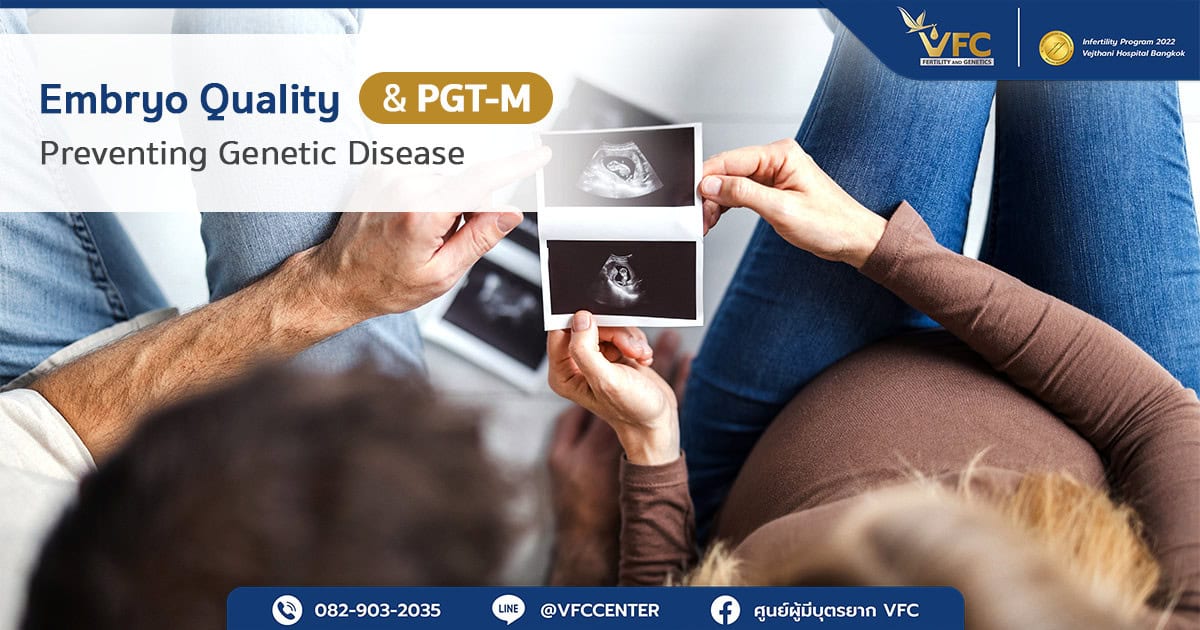
Key Takeaway: The PGT-M test (Preimplantation Genetic Testing for Monogenic Disorders) is a technology used to screen for genetic abnormalities at the embryonic level before implantation. It focuses on detecting disorders caused by single-gene mutations such as Thalassemia or Spinal Muscular Atrophy. When used alongside ICSI, this process helps specialists select the best embryo quality to ensure the baby is healthy and disease-free before being transferred to the uterus. This effectively reduces the risk of passing hereditary diseases from parents to their children.
Family planning today is no longer just about having a child, but about giving them the best possible start in life. In the past, families with a history of genetic disorders often faced anxiety about pregnancy or the risk of passing inherited diseases on to their children.
Thanks to advances in reproductive medicine, assisted reproductive technologies such as ICSI combined with the PGT-M test (Preimplantation Genetic Testing for Monogenic Disorders) have redefined prevention. This technology allows specialists to specifically screen embryos that are free from inherited genetic diseases before embryo transfer, significantly reducing the risk of passing genetic conditions from parents to their children.
What is PGT-M?
PGT-M (Preimplantation Genetic Testing for Monogenic Disorders) is a genetic diagnostic technology used to detect inherited genetic abnormalities at the embryo stage before implantation. It focuses on diseases caused by mutations in a single gene, which are often passed from parents to their children. The process involves four detailed steps:
- Test Preparation: Genetic specialists analyze blood samples from both parents and, in some cases, additional family members such as grandparents or previous children. This data is used to design a customized genetic probe tailored specifically to each family to detect targeted abnormalities.
- ICSI Process: Eggs and sperm are fertilized in the laboratory. The embryos are then cultured until they reach the Blastocyst stage (Day 5 or 6), which is the optimal time for testing.
- Embryo Biopsy: Embryologists remove a small sample (5 to 10 cells) from the trophectoderm. This is the part that will eventually become the placenta. This does not affect the cells that will develop into the baby, ensuring the embryo remains safe and maintains its full growth potential.
- Analysis and Selection: The extracted cells undergo the PGT-M test to categorize embryos into three groups: normal, carrier, or affected. This allows the physician to select a healthy, disease-free embryo with the best embryo quality for transfer.
How Does PGT-M Help?
Instead of waiting for prenatal testing during pregnancy, which can lead to difficult decisions if an abnormality is found, PGT-M allows you to know the genetic status of the embryo before pregnancy begins. It ensures that the doctor can select a healthy embryo for transfer. This effectively breaks the cycle of hereditary disease in the family.
Consult with specialists at VFC Center for embryo quality screening to reduce genetic risk.
Common Genetic Disorders Screened by PGT-M
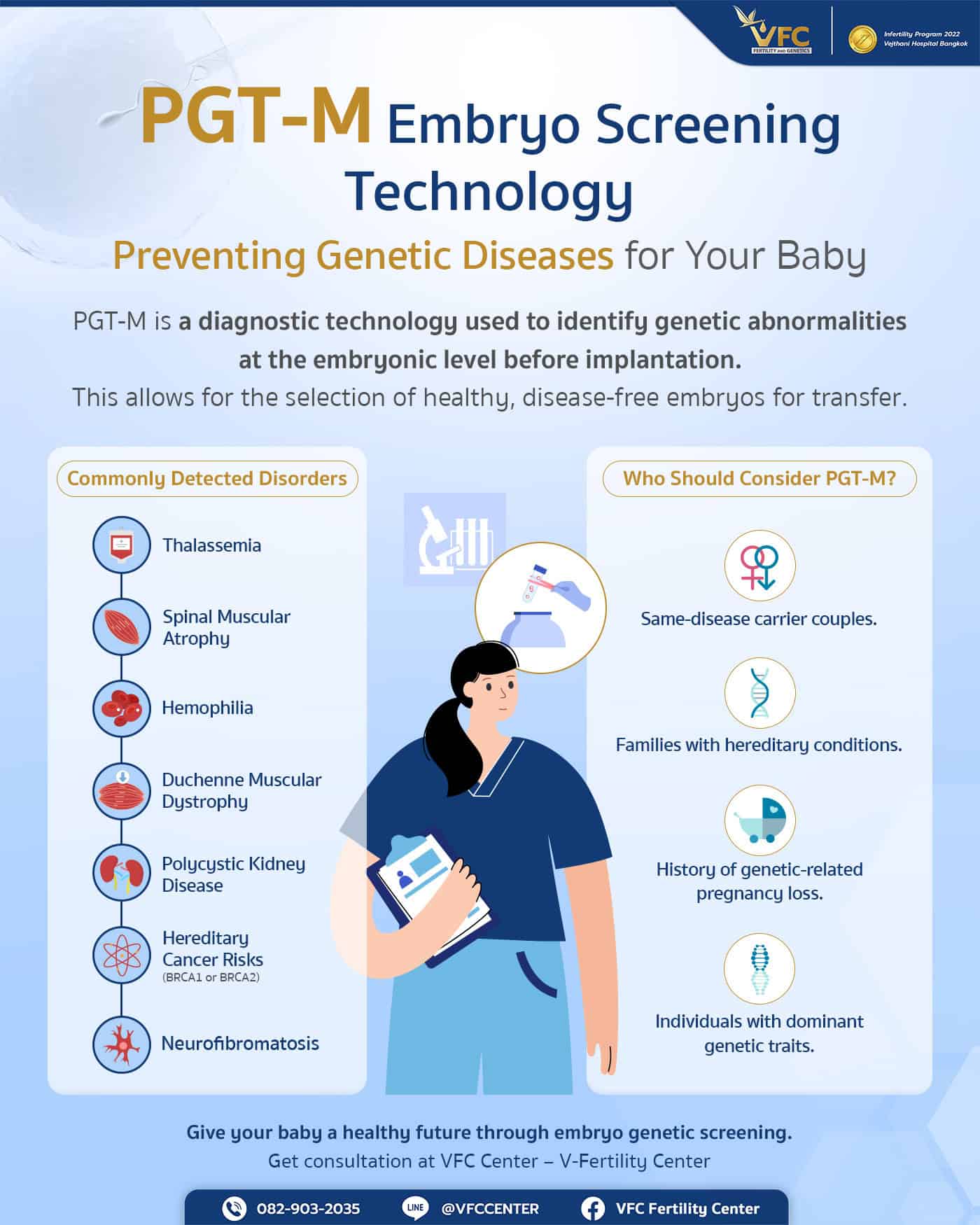
Today, PGT-M test technology can screen for nearly any single-gene disorder to ensure the highest embryo quality before implantation. Common high-risk examples include:
1. Thalassemia
Thalassemia is the most common genetic blood disorder in Thailand and Southeast Asia. Severity varies. Moderate cases involve paleness and slow growth, while severe cases can lead to fetal hydrops and stillbirth. Chronic cases may require lifelong blood transfusions and lead to organ complications.
2. Spinal Muscular Atrophy (SMA)
A severe condition affecting movement and breathing. In its most severe form (Type 1), symptoms appear within the first 6 months. It can be fatal before age 2. PGT-M is vital for families with this history.
3. Hemophilia
A disorder where blood does not clot normally. It is typically passed from carrier mothers to sons. It causes prolonged bleeding from wounds or internal bleeding into joints and muscles. This can lead to permanent disability or life-threatening complications.
4. Duchenne Muscular Dystrophy (DMD)
An X-linked disorder causing progressive muscle degeneration, usually in boys. Symptoms like frequent falling or difficulty sitting appear between the ages of 3 and 5. It leads to the loss of walking ability and eventual heart or respiratory failure.
5. Polycystic Kidney Disease (PKD)
A condition where numerous cysts grow in the kidneys. This causes them to enlarge and lose function, leading to high blood pressure, kidney stones, and chronic kidney failure requiring dialysis or transplant.
6. Neurofibromatosis
A disorder affecting nerve tissue growth, resulting in skin tumors and café-au-lait spots. It may also impact bones, learning ability, and, in some cases, lead to malignant tumors or nerve compression.
7. Hereditary Cancer Syndromes
PGT-M does not detect cancer itself but identifies inherited risk genes such as BRCA1 or BRCA2, which significantly increase the likelihood of breast and ovarian cancer later in life.

Why Parents Should Prioritize PGT-M
The PGT-M test is not just a medical procedure. It is an investment in your child’s future for the following reasons:
- Reduced Disease Risk: Prevents life-altering or life-shortening conditions.
- Peace of Mind: Reduces anxiety throughout the nine months of pregnancy.
- Reduced Physical and Emotional Burden: Avoids the pain of having to terminate a pregnancy if an abnormality is found later.
- Increased Success Rate: Selecting embryos with the best embryo quality increases the chances of a full-term pregnancy and reduces miscarriage rates.
Consult with specialists to plan your PGT-M screening.
Who Should Consider PGT-M?
Embryo genetic testing is suitable for couples who want to minimize the risk of passing on genetic conditions, specifically:
- Couples who have undergone carrier screening and found they carry the same genetic mutation.
- Couples with a known family history of genetic disorders.
- Couples who have previously had a child affected by or lost to a genetic condition.
- Individuals with a dominant genetic disorder who wish to prevent passing it to their offspring.
For parents interested in planning a healthy pregnancy with confidence, VFC Center (V-Fertility Center) offers personalized care. Our reproductive specialists provide comprehensive consultations and diagnostics to ensure your journey to parenthood is smooth and successful. If you are looking for PGT-M testing in Bangkok, our center provides world-class technology to help your child be born healthy and strong.
Article by Dr. Worawat Siripoon
Contact or Book a Consultation:
VFC Center – V-Fertility Center
Hotline: 082-903-2035
LINE Official: @vfccenter
Frequently Asked Questions about PGT-M (FAQs)

OBSTETRICS AND GYNAECOLOGY-REPRODUCTIVE MEDICINE
No Comments
Sorry, the comment form is closed at this time.