





Key takeaway / Summary of topic answer
Varicocele problems are one of the leading causes of semen not meeting normal standards in men and have a direct impact on sperm quality. This condition affects sperm through three main mechanisms: increased testicular temperature, oxidative stress, and the buildup of toxins. However, varicocele problems can be accurately diagnosed and effectively treated with microscopic varicocelectomy, a surgical approach that has a high likelihood of improving sperm quality within 3-6 months
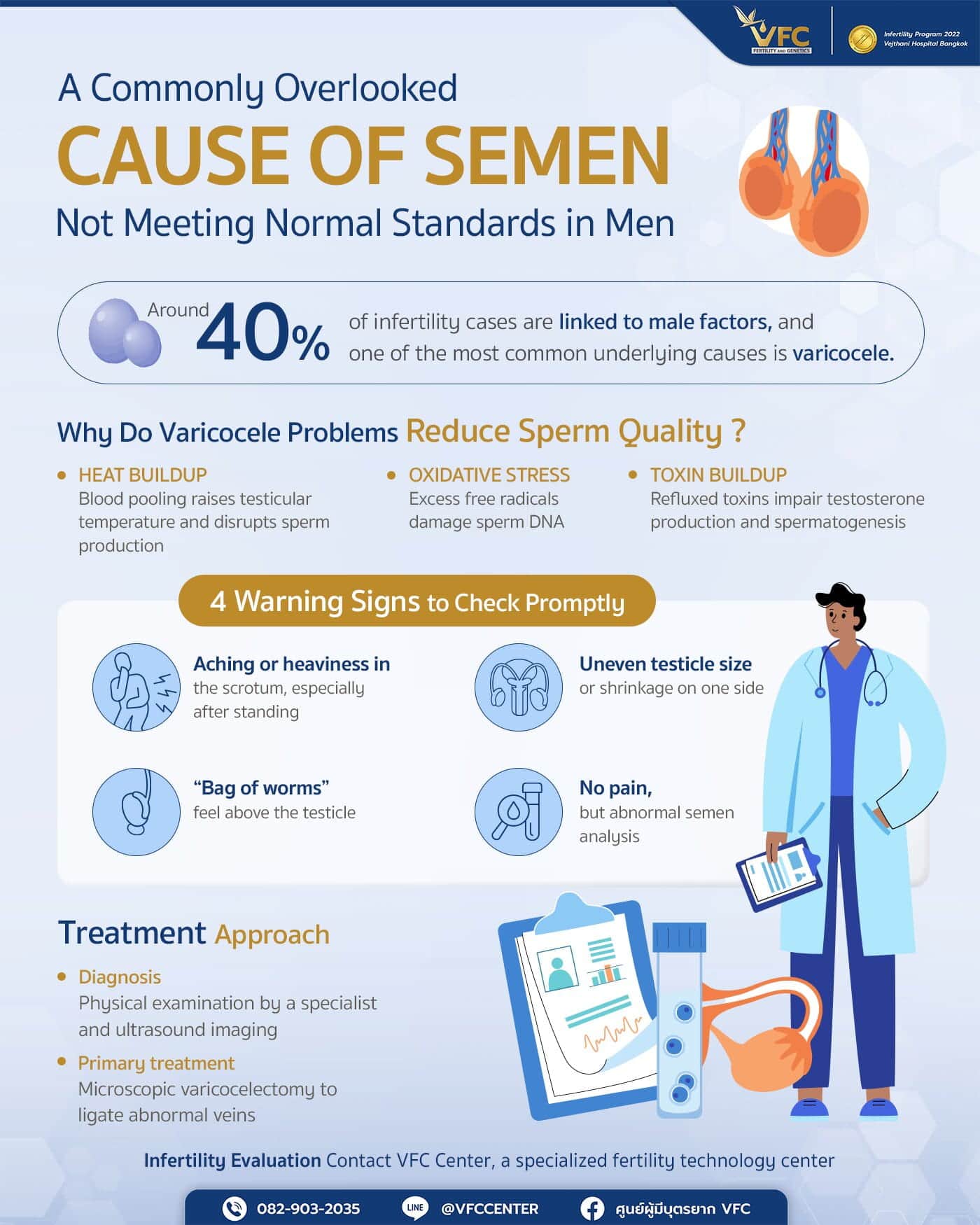
In reality, infertility is not caused by female factors alone. Around 40% of couples who struggle to conceive have male-related factors. One common sign is a semen analysis showing semen not meeting normal standards-such as low sperm count, poor motility, or abnormal morphology-which can directly reduce the chances of natural fertilization and pregnancy.
However, many men still don’t realize that varicocele problems are a major cause of reduced sperm quality. This condition is common in men of reproductive age but is often overlooked because many patients have little to no pain or clear warning signs-until they undergo fertility testing while planning for a baby.
In this article, we’ll explain the connection between varicocele problems and semen not meeting normal standards, including how it affects sperm production, warning signs you shouldn’t ignore, and the right diagnostic and treatment options to improve fertility outcomes.
Schedule an appointment with a specialist to evaluate the causes of infertility at VFC Center
Understanding Varicocele Clearly
Varicocele is a condition in which the veins within the scrotum become abnormally enlarged, impairing proper blood circulation and drainage from the testes back to the heart. This condition is similar to varicose veins in the legs but occurs in the venous system that supplies the testes.
In most cases, varicocele is more commonly found on the left side than the right due to anatomical differences in how the veins connect to larger blood vessels, resulting in higher venous pressure. It is frequently seen in men of reproductive age and is a well-documented medical cause of male infertility.
Although varicocele is not considered life-threatening and often does not interfere with daily activities, its impact on the reproductive system can be significant-especially for men who are planning to conceive.
What Does Semen Not Meeting Normal Standards Mean ?
Semen not meeting normal standards refers to semen analysis results in which one or more parameters fall outside the normal reference range, potentially affecting fertility. The main factors evaluated include:
- Semen volume: 2 milliliters or more
- Sperm concentration: 20 million sperm per milliliter or higher
- Total sperm count: 40 million sperm or more
- Sperm motility: At least 50% showing forward movement
- Sperm morphology: Abnormally shaped sperm-such as misshapen heads, short tails, or multiple tails-may reduce the ability to penetrate the egg
If any of these parameters fall below the standard range, the chances of sperm successfully reaching and fertilizing the egg decrease. In many cases, these abnormalities are linked to underlying varicocele problems that negatively affect sperm quality.
Schedule an appointment with a specialist to evaluate the causes of infertility at VFC Center
Why Do Varicocele Problems Cause Semen Not Meeting Normal Standards ?
Varicocele problems interfere with the mechanisms of semen production and lead to semen not meeting normal standards through the following pathways:
Increased Testicular Temperature
Sperm production requires a testicular environment that is about 2-3°C cooler than core body temperature. When varicocele problems occur, warm venous blood from the body flows backward and pools around the testes, disrupting the natural cooling system.
This temperature increase inhibits key enzymes needed for spermatogenesis and directly damages germ cells, causing sperm production to slow down or become less efficient.
Oxidative Stress
Impaired blood circulation reduces oxygen delivery to testicular tissue and leads to an accumulation of reactive oxygen species (ROS). These free radicals damage sperm cell membranes and, more critically, cause sperm DNA fragmentation.
As a result, semen not meeting normal standards may occur even when sperm count appears normal, because internal sperm quality is compromised-making fertilization more difficult and increasing the risk of early miscarriage.
Toxin Accumulation
The testicular veins connect directly to veins from the kidneys. When venous valves fail, byproducts from kidney and adrenal gland activity-such as cortisol-can reflux and accumulate in the testes instead of being eliminated.
These substances are toxic to the reproductive system, disrupting testosterone-producing cells, lowering testosterone levels, and ultimately reducing both sperm quantity and sperm quality over time.
Schedule an appointment with a specialist to evaluate the causes of infertility at VFC Center

Warning Signs That Should Be Evaluated When Varicocele Is Suspected
Varicocele problems usually do not cause severe pain, but abnormalities can often be noticed through self-observation, including:
- Scrotal discomfort: A heavy or dull aching sensation, especially after prolonged standing or walking, or later in the day. Symptoms often improve when lying down.
- Enlarged veins on palpation: When feeling above the testicle, soft, twisted veins may be noticeable, often described as a “bag of worms.”
- One testicle becoming smaller: Chronic blood pooling may lead to testicular atrophy, causing a visible size difference between the two sides.
- Abnormal semen without pain: Many men experience no pain at all but discover reduced sperm quality during fertility testing when planning for pregnancy.
Diagnostic Approach: Physical Examination and Semen Analysis
Diagnosis of varicocele begins with a detailed medical history and physical examination by a specialist. Patients are typically examined while standing or performing a bearing-down maneuver to assess venous enlargement. In some cases, ultrasound imaging is used to confirm abnormal blood flow and venous reflux.
At the same time, semen analysis is performed to evaluate the impact on sperm quality. By identifying both the underlying cause and the severity of the condition, physicians can develop a targeted and effective treatment plan.
Varicocelectomy as a Treatment Option
Varicocele problems are a treatable cause of male infertility. The standard treatment is varicocelectomy, a surgical procedure to ligate abnormal veins and restore normal testicular function.
Today, the most effective and widely used technique is microscopic varicocelectomy. This approach allows surgeons to clearly visualize small veins and lymphatic vessels, reducing the risk of complications and improving blood circulation. Clinical outcomes show that 60-80% of patients experience significant improvement in sperm quality within 3-6 months after surgery.
Schedule an appointment with a specialist to evaluate the causes of infertility at VFC Center
However, if sperm quality does not improve enough for natural conception-or in more complex cases-physicians may recommend advanced assisted reproductive technologies, such as ICSI combined with TESE sperm retrieval, to directly select the healthiest sperm from the testes.
Understanding the true cause of semen not meeting normal standards and choosing the right treatment approach from the start is a crucial step in helping couples move past uncertainty and closer to their goal of having a child. If you are experiencing concerns or have questions about male reproductive health and infertility, you can consult with specialist doctors at VFC Center (V-Fertility Center). Our fertility medicine experts are ready to provide personalized guidance and care at every stage of treatment.
Article by: Dr. Worawat Siripoon
Contact or Book a Consultation:
VFC Center – V-Fertility Center
Hotline: 082-903-2035
LINE Official: @vfccenter
Frequently Asked Questions About Varicocele Problems (FAQs)
If there is no pain, is treatment still necessary ?
Even in the absence of pain, if semen analysis reveals abnormalities linked to varicocele problems, treatment may be recommended, as this condition can negatively affect sperm quality over the long term.
Does everyone with varicocele have infertility ?
No. Not everyone with varicocele will experience infertility. However, it is a significant risk factor-especially in men whose semen is not meeting normal standards.
How long after varicocele surgery will sperm quality improve ?
Improvements in sperm quality are typically seen around 3 months after surgery and become more noticeable by 6 months, depending on individual health and disease severity.

OBSTETRICS AND GYNAECOLOGY-REPRODUCTIVE MEDICINE
No Comments
Sorry, the comment form is closed at this time.