




Key takeaway / Summary of topic answer
Preparing for pregnancy in women with chocolate cysts requires a structured and carefully planned approach, especially when it comes to stopping medication before ovarian stimulation. Allowing the ovaries sufficient time to recover normal function is essential for optimal response to ICSI treatment. Consulting a fertility specialist to determine the appropriate timing for discontinuing medication can significantly improve egg quality and increase the chances of a successful pregnancy.
Planning a pregnancy is an important phase for every couple, particularly for those with a history of reproductive system conditions such as chocolate cysts (endometriomas). Although this condition is not considered life-threatening, it can affect fertility potential and ovarian stimulation outcomes. Understanding how to manage medication for treating chocolate cysts and knowing when to stop treatment before ovarian stimulation helps prepare both the body and mind, allowing couples to move forward with confidence on their fertility journey.
Why Must Medication Be Stopped Before ICSI Treatment?
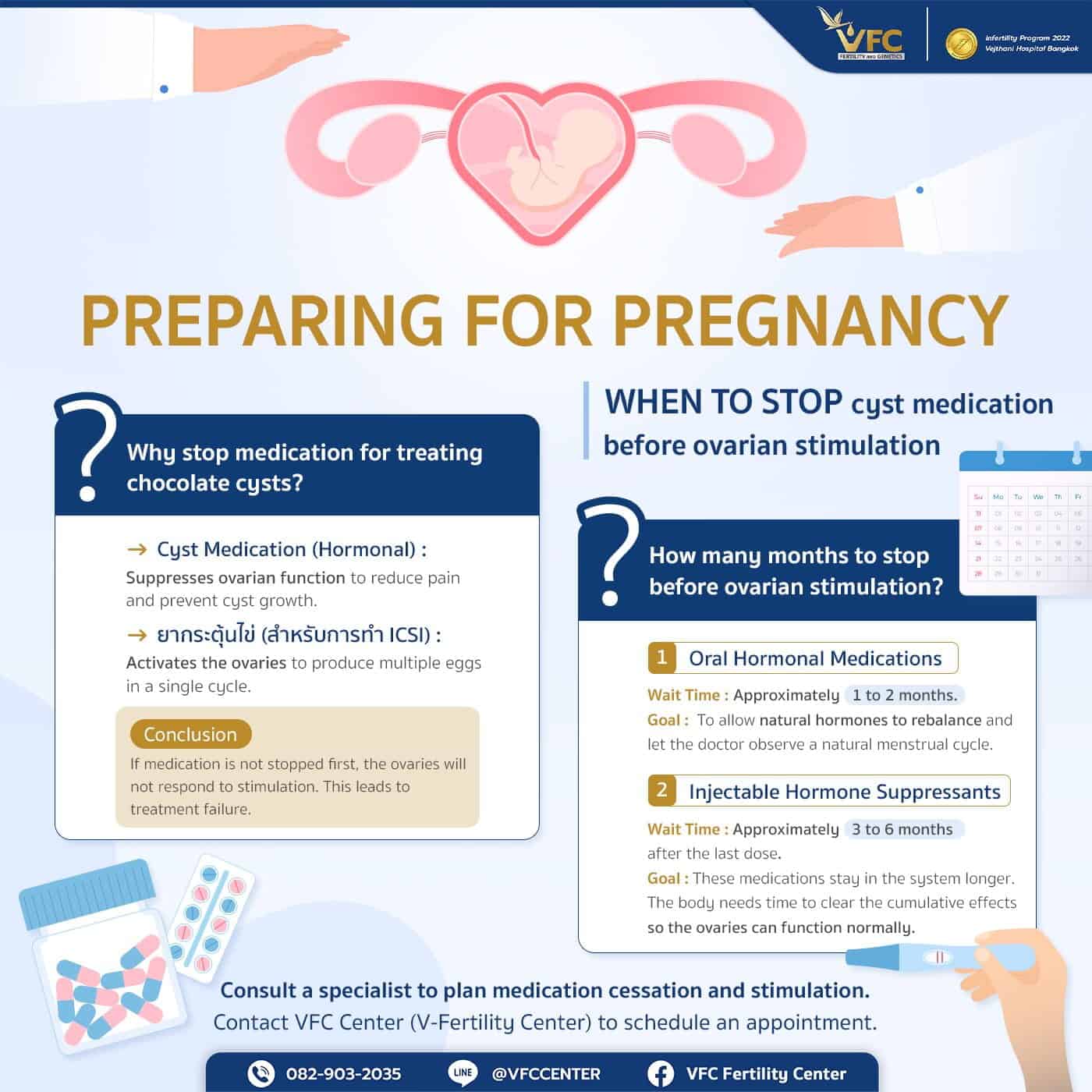
For women diagnosed with chocolate cysts who are not yet ready to conceive, doctors often prescribe medication for treating chocolate cysts, typically hormonal therapies such as oral contraceptives, progestin-only medications, or injectable ovarian suppression hormones. These medications suppress menstruation to relieve pain and prevent cyst growth.
However, when preparing for ICSI treatment, ovarian stimulation injections are required to encourage the ovaries to produce multiple eggs in a single cycle. Since cyst-treatment medications suppress ovarian activity, continuing them during stimulation would counteract fertility medications. Without proper stopping medication before ovarian stimulation, the ovaries may not respond effectively, leading to cycle failure. Fertility specialists therefore carefully manage medication withdrawal to ensure ovarian readiness.
How Many Months Should Medication Be Stopped Before Pregnancy?
One of the most common questions is: “How long should I stop medication for treating chocolate cysts before trying to conceive?” There is no single timeline that applies to all cases. The duration depends on the type of medication and medical judgment. Proper withdrawal allows hormone balance restoration and improves egg quality during the actual fertility cycle.
1. Oral Hormonal Medications
For oral contraceptives or hormone tablets, doctors usually recommend stopping medication 1-2 months before ovarian stimulation. This allows natural hormone cycles to normalize and helps doctors evaluate true menstrual patterns before treatment begins.
2. Injectable Hormone Suppression
Injections have a cumulative effect and stay in the system longer than pills. Some patients may need to wait 3-6 months after their last injection for the ovaries to return to normal function, depending on the specialist’s discretion.
Important Note: Do not discontinue medication on your own. Sudden withdrawal may trigger cyst inflammation or rapid growth. Always consult a fertility specialist to plan medication cessation safely.
Consult a reproductive medicine specialist to plan medication withdrawal and pregnancy preparation.
Preparing for Pregnancy in a Structured Way
Despite the challenges of chocolate cysts, following these guidelines can maximize the success of ICSI treatment.
1. Nutrition and Lifestyle Care
Chocolate cysts are inflammation-related conditions. Focus on anti-inflammatory foods such as leafy greens and omega-3-rich fish, while avoiding sugar and processed foods. These dietary adjustments help support egg quality at the cellular level.
2. Ovarian Reserve Assessment
Before treatment, doctors perform ultrasound examinations to assess antral follicle count (AFC), measuring the number of small follicles in the ovaries. Blood tests for AMH levels may also be conducted to evaluate how much ovarian tissue has been affected. This information guides precise dosing of ovarian stimulation medications.
3. Accurate Medication Withdrawal and Stimulation Timing
Clear communication with fertility specialists regarding medication history ensures accurate timing for discontinuation and stimulation. This precision is critical for obtaining high-quality eggs and optimal treatment outcomes.
Before stopping medication or planning stimulation, the most important first step is a detailed health check-up to assess your success rate and create a personalized plan. Start your journey today with VFC Center (V-Fertility Center). We provide comprehensive infertility screening in Bangkok to evaluate the health of your fallopian tubes, ovaries, and hormones, ensuring you move toward pregnancy with confidence.
Article by Dr. Worawat Siripoon
Contact or Book a Consultation:
VFC Center – V-Fertility Center
Hotline: 082-903-2035
LINE Official: @vfccenter
Frequently Asked Questions About Chocolate Cyst Medication and Pregnancy Planning (FAQs)
What are the consequences if the medication for treating chocolate cysts is not stopped before starting ovarian stimulation?
If medication is not stopped at the correct time, the cyst treatment will counteract the stimulation drugs. This results in the ovaries failing to respond and follicles not growing as intended. This leads to a much lower egg yield and may result in the cancellation of the entire treatment cycle.
Is there a risk that the cyst will grow dangerously large while waiting for stimulation after stopping medication?
There is a chance the cyst may grow once regular menstruation returns. This is why doctors schedule close monitoring to start the stimulation process at the most appropriate window before the cyst significantly impacts the remaining ovarian tissue.

OBSTETRICS AND GYNAECOLOGY-REPRODUCTIVE MEDICINE
No Comments
Sorry, the comment form is closed at this time.