




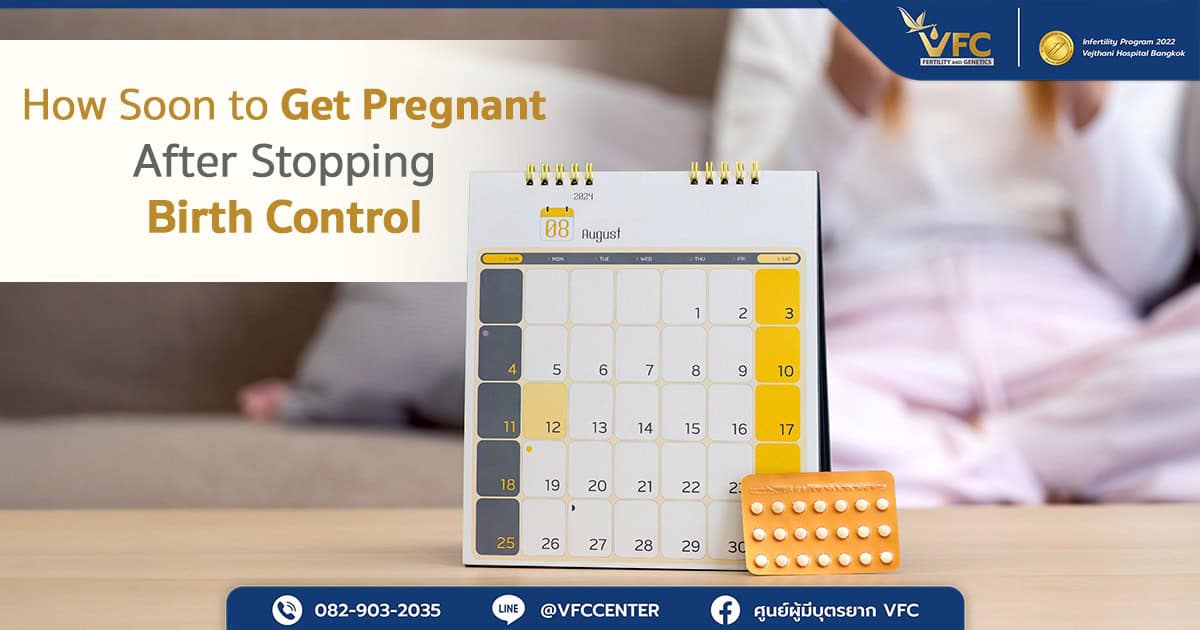
Many people who have stopped taking birth control pills and are planning a pregnancy wonder how long it will take to conceive naturally. In reality, every body recovers at a different pace depending on how long birth control was used, the type of pill, and overall reproductive health. Understanding how many days after stopping birth control will ovulation happen or how many months to get pregnant after stopping birth control helps improve your chances of conceiving with confidence.
Consult with fertility specialists at VFC Center – V-Fertility Center.
How many months after stopping birth control pills can you get pregnant?
Some people believe that pregnancy can happen immediately after stopping the pill but the truth depends on how quickly your body rebalances. After stopping the pill, your natural hormones gradually return to normal, but your body still needs time to adjust. This recovery timeline varies from person to person.
Is it possible to get pregnant right after stopping birth control pills?
Individuals who used birth control pills for a short period (less than 6 months) or who have good overall health typically have a higher chance of conceiving immediately compared to those with weaker reproductive health.
Average timeframe when pregnancy is most likely to occur
Generally, healthy women tend to conceive within 1-3 months after stopping the pill. Most people will achieve pregnancy within 1 year if having regular unprotected intercourse.
Hormone recovery timeline after stopping the pill
Because birth control pills work by preventing ovulation, your body needs time to restore normal levels of estrogen, progesterone, LH, and FSH. On average, it takes 2–3 months for menstrual cycles to become regular again and for ovulation to resume.
Important note: Injectable contraceptives or hormonal implants may take longer to clear from the body sometimes 6 months to 1 year because these methods store more hormones in the system.
How many days after stopping birth control will ovulation happen? Key signs your body is returning to normal
For women who have been taking birth control regularly, the question often arises: “How many days after stopping birth control will ovulation happen?” Here’s how the body typically recovers:
Timeline for ovulation to return after stopping the pill
Most people begin ovulating again within 2-6 weeks after their last pill. However, ovulation can take longer for those who used the pill continuously for years or have hormonal imbalances.
Signs your body is “ready to ovulate” naturally
Recognizing these signs can help you identify your “fertile window” to maximize your chances of conceiving:
- Clear, stretchy cervical mucus resembling egg whites: the clearest indicator of ovulation.
- Mild pelvic cramps or breast tenderness: known as Mittelschmerz.
- Slight rise in basal body temperature (BBT): increases by 0.2–0.5°C after ovulation.
- Increased libido: a natural biological signal that your body is ready for conception.
- A positive ovulation test (two lines): LH surges 24–36 hours before ovulation.
Factors that influence getting pregnant after stopping birth control
Beyond hormone recovery time, lifestyle and health factors also affect how quickly pregnancy can occur.
Duration of previous birth control use
Those who used birth control pills for a short duration (under 6 months) usually return to ovulating sooner, while long-term users may need more time.
Age
After age 35, egg quality and quantity naturally decline, and cycles may become irregular, reducing the likelihood of pregnancy.
Weight and nutrition
Being underweight or overweight can disrupt hormonal balance and ovulation. Consuming a nutrient-rich diet and healthy fats can help support reproductive health.
Stress and sleep
Chronic stress and poor sleep can disrupt LH and FSH production, interfering with ovulation. Managing stress is essential for hormone balance.
Partner’s reproductive health
Pregnancy requires healthy sperm. If the male partner has low sperm count or poor sperm quality, testing and treatment may be necessary to plan conception effectively.
ALT IMG Tag: Birth control pills and a pregnancy test, illustrating the question “How many days after stopping birth control will ovulation happen?”
How to prepare your body for pregnancy after stopping birth control pills
Proper preparation increases the likelihood of pregnancy after discontinuing birth control pills.
- Health check and medical consultation: Get a complete reproductive health assessment before attempting to conceive.
- Start folic acid: Take folic acid at least 1 month before conception to prevent neural tube defects.
- Improve diet and maintain healthy weight: Eat nutritious foods, reduce sugar/processed carbs, and maintain a BMI between 18.5–24.9.
- Manage stress and sleep: Engage in relaxing activities and sleep 7–8 hours nightly.
- Avoid risky habits: Avoid alcohol, smoking, and limit caffeine.
Consult fertility specialists at VFC Center – V-Fertility Center.
For couples concerned about how long it will take to conceive after stopping birth control: once hormones stabilize and cycles return, fertility generally returns. But if it has been several months with no pregnancy or you’re unsure how to get pregnant fast after stopping the pill a consultation with a reproductive specialist can help assess your fertility and create a personalized conception plan.
Article by DR. SORRAMON SONGVEERATHAM
Contact or Book a Consultation:
VFC Center – V-Fertility Center
Hotline: 082-903-2035
LINE Official: @vfccenter
Frequently Asked Questions (FAQs)
Q : How many months to get pregnant after stopping birth control?
A: Most healthy women conceive within 1-3 months, but some may take up to 1 year, depending on hormonal recovery and menstrual cycle regularity.
Q : What factors affect pregnancy after stopping birth control?
A: Age, duration of pill use, weight, nutrition, stress, sleep, and the partner’s sperm quality.
Q : What are signs the body is ready to ovulate again?
A: Egg-white cervical mucus, breast tenderness, pelvic discomfort, a rise in basal body temperature, increased libido, or a positive ovulation test.
Q : How to prepare the body to increase pregnancy chances after stopping the pill?
A: Get a health check, take folic acid, eat nutritious foods, maintain a healthy weight, manage stress, and avoid alcohol, smoking, and caffeine.

OBSTETRICS AND GYNAECOLOGY-REPRODUCTIVE MEDICINE
No Comments
Sorry, the comment form is closed at this time.