





When IUI results do not meet expectations, many couples feel discouraged and begin questioning what went wrong or what steps to take next. These feelings are completely understandable. In reality, failed IUI is very common and does not mean you can no longer become pregnant. Understanding the underlying causes and adjusting the treatment plan appropriately is a key step toward achieving a successful pregnancy in the future.
Consult VFC Center to plan your next IUI cycle and improve pregnancy outcomes.
Why Does IUI Fail and What Should You Do Next?
IUI (Intrauterine Insemination) is one of the most commonly used fertility treatments because it is relatively simple and affordable. However, many couples feel disappointed after 1–2 unsuccessful cycles. It is important to understand that this is considered normal, as the average IUI success rate is approximately 10–20% per cycle.
Each couple may face different contributing factors. Identifying these factors helps guide future treatment decisions and increases the chances of pregnancy success.
Understanding IUI Basics
IUI is a procedure in which healthy sperm are selected and prepared, then injected directly into the uterus around the time of ovulation. This increases the chance of natural fertilization. IUI is suitable for women with open fallopian tubes and couples with mild infertility, such as irregular ovulation or slightly reduced sperm quality.
However, IUI still relies on natural fertilization and implantation. Even small disruptions such as poor egg quality, weak sperm, or mistimed ovulation can lead to failed IUI.
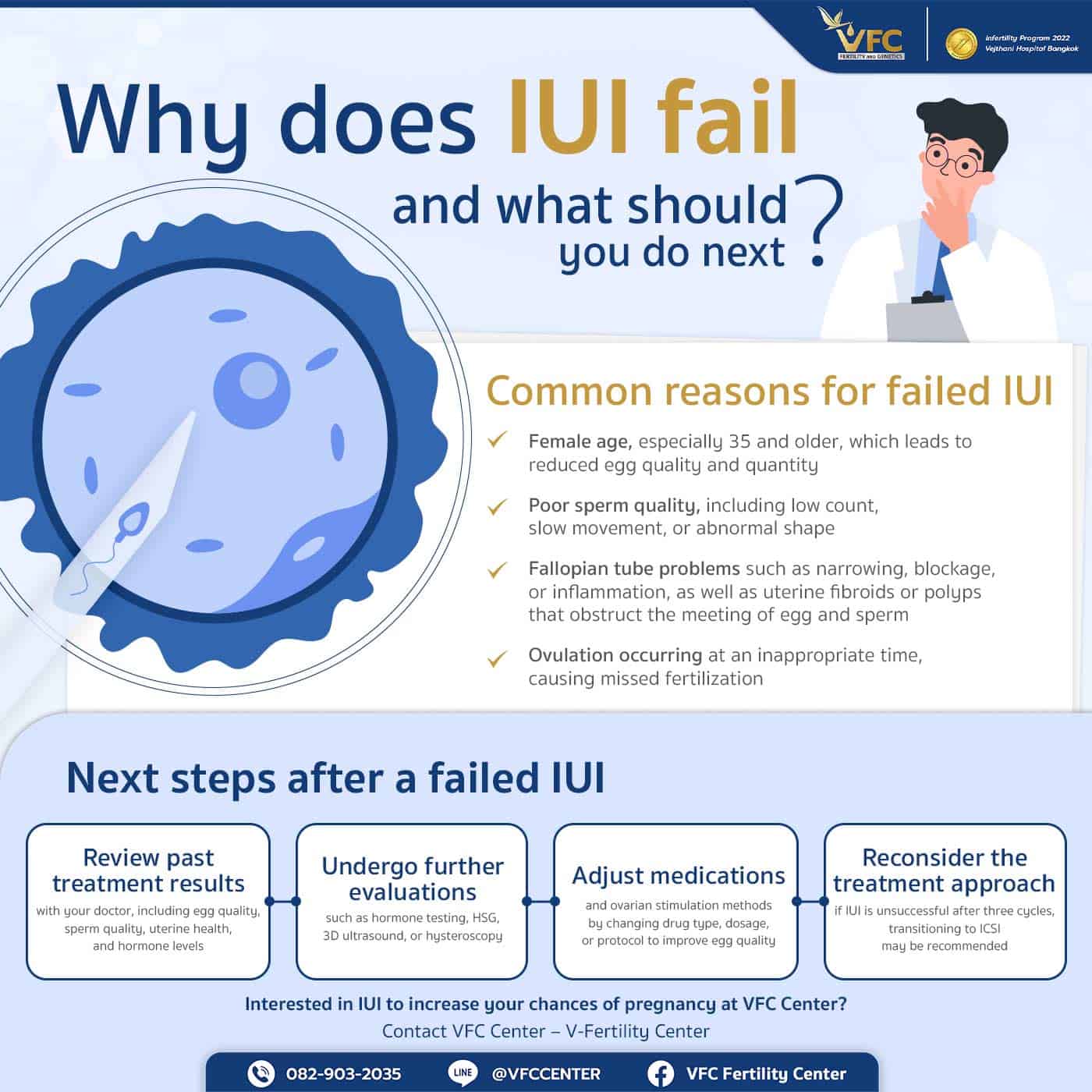
Most Common Causes of Failed IUI
1. Female Age
Age plays a major role in fertility and affects IUI outcomes in several ways:
- Egg quality declines, reducing fertilization and embryo development
- Egg quantity decreases with age
By age group:
- Ages 20–34: Good egg quality, higher success rates
- Ages 35–38: Egg quality begins to decline
- Age 38 and above: Significantly lower success rates, and may require alternative treatments
2. Poor Sperm Quality
Even after sperm selection, if the total motile sperm count is below optimal levels, or if sperm movement is slow or abnormal, fertilization may not occur. Weak sperm may not reach the fallopian tube or successfully fertilize the egg, resulting in failed IUI.
3. Fallopian Tube or Uterine Problems
Reproductive health issues can significantly affect IUI outcomes, including:
- Fallopian tube problems, such as blockage, inflammation, or endometriosis, can interfere with egg and sperm transport
- Uterine issues such as polyps, fibroids, or intrauterine adhesions that prevent embryo implantation
4. Ovulation Timing Issues
Despite careful monitoring, some patients may experience:
- Delayed ovulation
- Early ovulation
- Poor response to ovulation-stimulating medications
- Hormonal imbalance
These factors may cause sperm and egg to miss each other, leading to fertilization failure.
Consult VFC Center to refine your IUI treatment plan.
What Should You Do After a Failed IUI?
If your first IUI cycle is unsuccessful, the following steps are recommended:
1. Review the Previous Cycle with Your Doctor
Evaluate key factors such as:
- Was the timing of insemination aligned with ovulation?
- Were egg and sperm quality sufficient?
- Were there underlying uterine or hormonal issues?
This review helps refine the treatment plan for better outcomes.
2. Undergo Additional Testing
If no clear cause is found, further testing may be recommended, including:
- Advanced hormone testing
- HSG (Hysterosalpingography) to confirm open fallopian tubes
- 3D ultrasound or hysteroscopy to detect polyps, fibroids, or adhesions
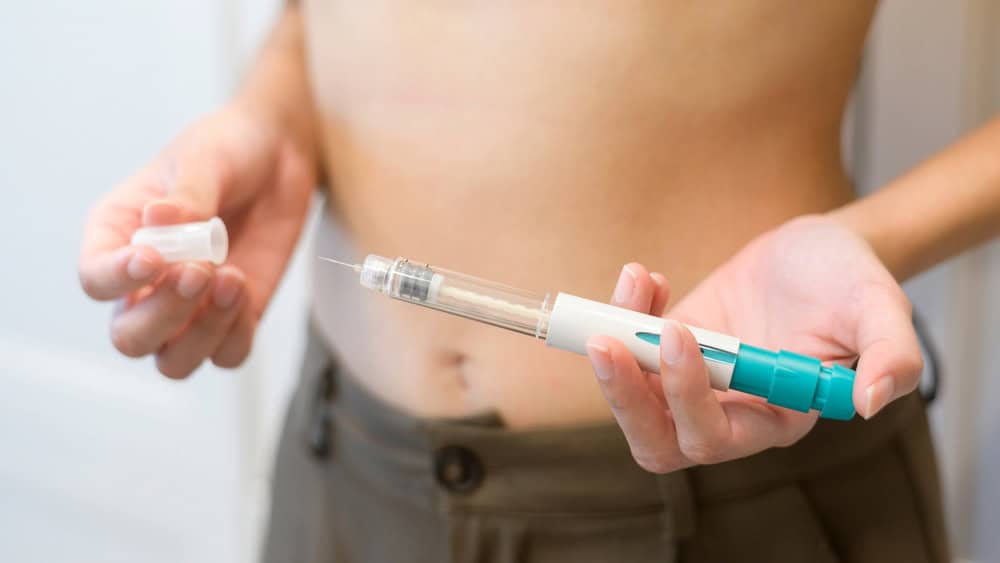
3. Adjust Medications and Ovulation Stimulation
Your doctor may modify medication type, dosage, or stimulation protocols to improve egg quality, quantity, and uterine lining thickness.
4. Consider the Recommended Number of IUI Attempts
For couples wondering about the recommended number of IUI attempts, doctors typically suggest trying IUI up to 3 cycles. If pregnancy does not occur after this, success rates decline significantly.
At this point, your doctor may recommend transitioning to ICSI (Intracytoplasmic Sperm Injection), an advanced IVF technique with higher success rates due to direct fertilization and embryo selection.
Start Your Fertility Journey with VFC Center
Even after failed IUI, pregnancy is still possible with proper evaluation and personalized treatment planning.
If you are considering IUI or exploring next-step fertility options, consult our specialists today. Learn more about the iui procedure and personalized treatment planning at VFC Center.
Article by: Dr. Sorramon Songveeratham
Contact or Book an Appointment:
VFC Center – V-Fertility Center
Hotline: 082-903-2035
LINE Official: @vfccenter
FAQs
Q: Can I do IUI if one fallopian tube is blocked?
A: Yes, if the other tube is open, IUI is possible, though success rates may be slightly reduced.
Q: Should poor sperm quality automatically require ICSI instead of IUI?
A: It depends on severity. Severe sperm abnormalities may benefit more from ICSI.
Q: Can a thin uterine lining cause failed IUI?
A: Yes. Adequate lining thickness is necessary for implantation and may require medication adjustment.

OBSTETRICS AND GYNAECOLOGY-REPRODUCTIVE MEDICINE
No Comments
Sorry, the comment form is closed at this time.