




Egg quality is one of the most crucial factors in the ICSI process. High-quality eggs help ensure that fertilization occurs efficiently and that the resulting embryo can develop into a strong, healthy blastocyst. Even minor abnormalities in an egg can lead to failed fertilization, poor embryo development, or early-stage pregnancy loss, ultimately reducing the chances of a successful outcome.
However, with spindle visualization technology, which allows specialists to observe the meiotic spindle within the egg, fertility treatment becomes more precise and effective. This technology helps identify eggs that are truly ready for fertilization, enabling doctors to select those with the highest potential. As a result, it can significantly increase the chances of fertilization and improve overall pregnancy success rates.
Consult a reproductive medicine specialist to plan your ICSI treatment at VFC Center.
What Is the Meiotic Spindle and Why Does It Matter in Fertilization?
The meiotic spindle, also known as the spindle fiber, is a tiny microtubule structure inside the egg cell. It plays a critical role in aligning and separating chromosomes during the egg’s final stage of division (Meiosis II) before fertilization occurs.
Because of this, assessing the meiotic spindle through spindle visualization technology is an important step in determining the egg’s readiness. When the spindle is clearly visible and positioned correctly under the microscope, it indicates good egg quality and that the egg is prepared for the ICSI procedure. Identifying eggs with a healthy meiotic spindle can significantly increase the chances of fertilization.
Abnormal Characteristics of the Meiotic Spindle
When the meiotic spindle becomes abnormal – whether due to a woman’s age, stress, hormonal imbalance, or even suboptimal egg-culture conditions in the laboratory – it can reduce the egg’s potential for successful fertilization. Common types of spindle abnormalities include:
Spindle distortion or incorrect alignment
Normally, the meiotic spindle should be symmetrically arranged and oriented in a single direction so it can accurately pull chromosomes apart. If the spindle is tilted, twisted, or misaligned, chromosomes may separate in the wrong direction, leading to incomplete or faulty cell division.
Uneven or improper chromosome separation
During egg division, the meiotic spindle is responsible for pulling chromosome sets apart. If this mechanism fails – such as uneven pulling force or microtubules detaching mid-process – the resulting egg may end up with an incorrect number of chromosomes.
Weak or incomplete spindle structure
A weak spindle structure can result from improper temperature conditions during egg handling or culture. Age-related decline can also cause microtubules to deteriorate, reducing their ability to function effectively.
When the meiotic spindle does not function correctly, it becomes a major cause of failed fertilization, poor embryo development, or early miscarriage. It may also increase the risk of chromosomal abnormalities in the baby, such as Down syndrome. Identifying abnormal spindle structures through spindle visualization technology allows specialists to better assess egg quality and ultimately increase the chances of fertilization.
Techniques for Assessing Meiotic Spindle Quality in Eggs
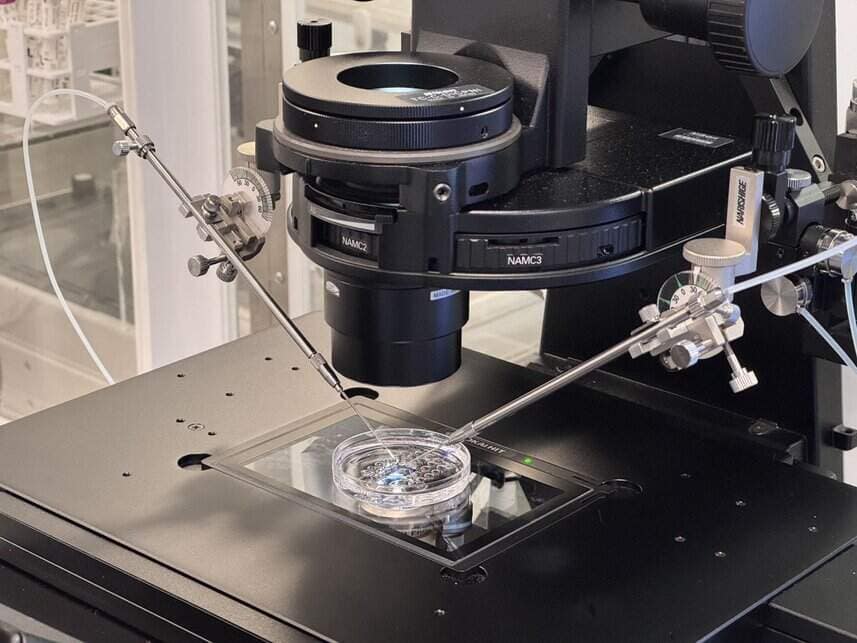
Today’s medical technology has made it possible to clearly visualize the meiotic spindle inside the egg without damaging the cell, marking a major advancement in embryology laboratories. This type of spindle visualization technology allows specialists to evaluate spindle structure safely and accurately. One of the leading technologies used for spindle assessment is:
Oosight Meiosis Imaging System
A widely recognized and commonly used technology is the Oosight Meiosis Imaging System, which utilizes polarized light microscopy through a high-quality microscope.
This system works by passing polarized light through the egg cell, enabling real-time visualization of the meiotic spindle – its position, integrity, and alignment – without the need for dyes or chemicals that could harm the egg. The information gathered through the Oosight system helps embryologists select eggs that exhibit the following characteristics:
- Are in the optimal stage for fertilization (MII)
- Have a complete and well-aligned meiotic spindle structure
- Show reduced risk of chromosomal abnormalities
This precise screening method plays a crucial role in selecting eggs with the highest potential, helping to improve egg quality, support healthy embryo development, and ultimately increase the chances of fertilization in ICSI treatment.
Consult a reproductive medicine specialist to plan your ICSI treatment at VFC Center.
Benefits of Using Meiotic Spindle Assessment Technology in ICSI
Using the Oosight system to evaluate egg quality before ICSI offers several important advantages:
- Safe and non-invasive for the egg
This advanced technology allows spindle assessment without damaging the egg cell. The process is completely non-invasive and does not interfere with cell integrity. - More accurate selection of the best eggs
Embryologists can identify eggs with a healthy meiotic spindle and optimal readiness for fertilization, ensuring that only the most viable eggs are chosen for ICSI. - Reduced risk of structural damage
Because the exact spindle position is visible, embryologists can avoid inserting the ICSI needle in a way that might damage cellular structures or chromosomes. - Higher success rates in the ICSI process
Selecting eggs with a clearly visible and properly aligned meiotic spindle is associated with:- Higher fertilization rates
- Better blastocyst development
- Increased chances of pregnancy
With advanced tools that assess the structural integrity of the egg before ICSI, fertility specialists can elevate the standard of care and improve pregnancy success rates for couples undergoing treatment. At VFC Center – an advanced infertility clinic in Thailand – we utilize the Oosight Meiosis Imaging System, a polarized-light microscope, to visualize the meiotic spindle and accurately evaluate egg readiness prior to fertilization. This helps enhance the likelihood of a successful pregnancy for couples planning to build their family.
Article by Dr. Worawat Siripoon
Contact or Book a Consultation:
VFC Center – V-Fertility Center
Hotline: 082-903-2035
LINE Official: @vfccenter
Frequently Asked Questions (FAQs) About Meiotic Spindle Assessment Technology

OBSTETRICS AND GYNAECOLOGY-REPRODUCTIVE MEDICINE
No Comments
Sorry, the comment form is closed at this time.