





A pituitary gland tumour can disrupt the hormones that control ovulation, sperm production, and overall reproductive function, making it harder to conceive naturally. Although most tumours are benign, they may still cause hormonal imbalance or pressure on nearby nerves, affecting fertility in both men and women. With proper diagnosis, hormonal treatment, and assisted reproductive technologies at a fertility hospital in Thailand, many patients with a pituitary gland tumour can still achieve a safe and successful pregnancy.
Pregnancy and fertility depend on more than just healthy reproductive organs. The human body’s systems are interconnected, and many hormones that regulate vital functions are produced by the pituitary gland. Therefore, a pituitary gland tumour can significantly affect the ability to conceive and maintain a healthy pregnancy.
Pituitary Gland Tumour — A Silent but Dangerous Condition
The pituitary gland is a small endocrine gland located at the base of the brain, often called the “master gland” because it produces hormones that regulate other endocrine glands, such as the thyroid, adrenal glands, ovaries, and testes.
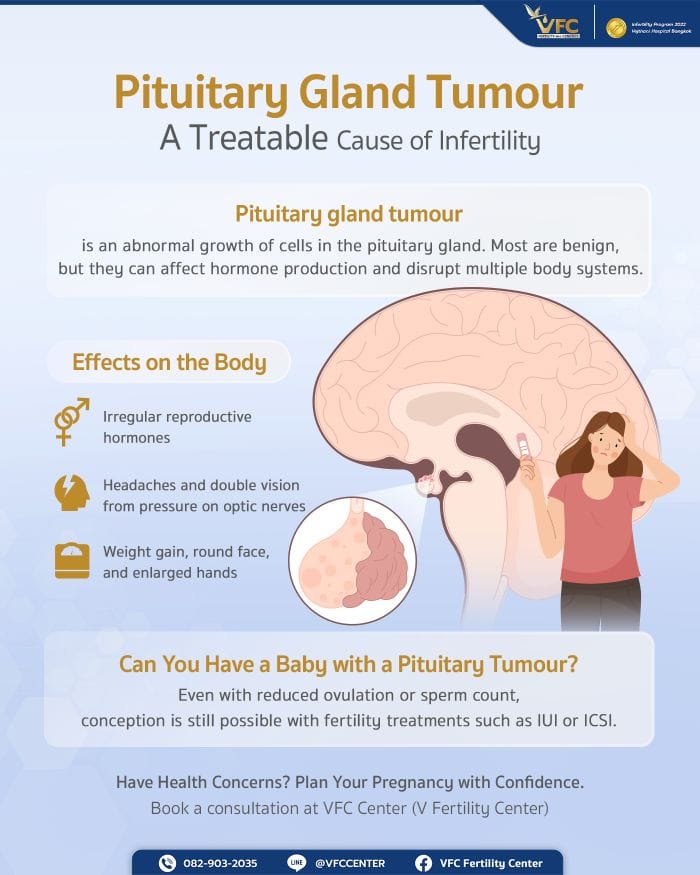
A pituitary gland tumour is an abnormal growth of cells in this gland, typically a benign adenoma that doesn’t spread to other organs but can still affect the body in two major ways — by producing excess hormones and by compressing nearby brain tissue or nerves.
Symptoms of Pituitary Gland Tumour
In the early stages, this condition often presents no specific symptoms, so many people are unaware until the tumour enlarges or disrupts hormonal balance. Common warning signs include:
- Unexplained physical changes such as rapid weight gain or loss, swelling in the face, or skin darkening
- Irregular or absent menstruation, along with spontaneous milk discharge in the absence of pregnancy
- Persistent fatigue, weakness, or lack of energy
- Mood swings, irritability, poor concentration, or memory problems
Causes of Pituitary Gland Tumour
While the exact cause remains unclear, several risk factors may contribute, such as:
- Genetic conditions like Multiple Endocrine Neoplasia type 1 (MEN1) that cause tumours in multiple endocrine glands, including the pituitary
- Specific gene mutations that regulate pituitary cell growth
- Hormonal or internal stimuli that trigger abnormal cell division
- Chronic stress or central nervous system disorders that affect hormonal balance
Can you get pregnant with a pituitary gland tumour? Consult a reproductive specialist at VFC Center.

How a Pituitary Gland Tumour Affects the Body
If you’re wondering, is pituitary gland tumour dangerous, the answer is yes — it can impact multiple systems in the body due to excessive hormone secretion or compression of nearby structures. Common complications include:
- Overproduction of hormones such as prolactin (causing infertility and milk discharge), growth hormone (causing enlarged hands, feet, or face), and cortisol (causing obesity and a round face)
- Chronic headaches, especially in the central skull or behind the eyes
- Vision problems include double vision, loss of peripheral vision, and partial blindness
- Neurological symptoms such as seizures, dizziness, or temporary loss of balance
- Hormonal deficiency resulting from pituitary dysfunction leads to severe fatigue, cold intolerance, and abnormal weight changes.
- Pituitary apoplexy, a sudden hemorrhage within the tumour that causes acute headache, blurred vision, nausea, vomiting, and can be life-threatening
- Other complications include cardiovascular disease, diabetes, hypertension, osteoporosis, and recurrent miscarriage
Can Someone with a Pituitary Gland Tumour Have a Baby?
The pituitary gland regulates reproductive hormones such as FSH, LH, and prolactin. When a pituitary gland tumour develops, these hormones may become imbalanced, leading to irregular ovulation, low sperm production, or infertility in both men and women.
Although fertility may be reduced, patients with pituitary tumours can still have children with proper treatment and reproductive planning. Certain tumours, especially prolactinomas that overproduce prolactin, can be managed with medication to restore hormonal balance. Once normalized, some patients can conceive naturally.
If fertility does not return to normal, assisted reproductive technologies may be recommended, such as IUI (Intrauterine Insemination) — to help sperm reach the uterus directly, or ICSI (Intracytoplasmic Sperm Injection) — for those with hormonal imbalance or poor egg and sperm quality.
Chances of pregnancy depend on the tumour type, size, and hormone levels. With proper management, fertility can often be restored, allowing a safe pregnancy under the supervision of both endocrinologists and fertility specialists.
Book an appointment for a fertility evaluation and pregnancy planning with our specialists.
Treatment Options for Pituitary Gland Tumour
Treatment depends on the tumour type and size. The three main approaches include:
1. Medication
The first-line treatment for hormone-secreting tumours such as prolactinoma involves dopamine agonists like Cabergoline or Bromocriptine to suppress hormone production and reduce tumour size.
2. Surgery
For large tumours compressing the optic nerves or resistant to medication, transsphenoidal surgery (through the nasal cavity) is often performed. It’s a safe and minimally invasive approach with quick recovery.
3. Radiation Therapy
Used for patients who cannot undergo complete surgery or experience tumour regrowth. Targeted radiation helps control abnormal cell growth and maintain long-term hormonal stability.
Patients diagnosed with a pituitary gland tumour that disrupts reproductive hormones can undergo comprehensive fertility evaluation and treatment planning at VFC Center (V Fertility Center) — a trusted fertility hospital in Thailand. The center provides advanced reproductive technologies such as egg freezing, sperm retrieval, and ICSI, under the care of experienced reproductive endocrinologists, helping patients achieve healthy pregnancies safely and confidently.
Frequently Asked Questions (FAQ)
Q: Is pituitary gland tumour dangerous?
A: Most pituitary tumours are benign, but they can still affect hormone secretion or compress nearby nerves. Without treatment, they may cause chronic headaches, vision problems, or hormonal imbalance. Medical evaluation by an endocrinologist is essential.
Q: How does a pituitary gland tumour cause infertility?
A: A tumour that secretes excess prolactin (prolactinoma) suppresses ovulation in women and lowers sperm quality in men. This can lead to infertility, but pregnancy is still possible with proper hormonal treatment and reproductive planning.
Q: How does ICSI help patients with a pituitary gland tumour conceive?
A: Hormonal imbalance often causes poor egg release or low sperm quality. ICSI allows doctors to select a healthy sperm and inject it directly into the egg under lab conditions, then transfer the fertilized embryo back to the uterus — enabling pregnancy even with incomplete reproductive function.
Q: Is pregnancy risky for patients with a pituitary gland tumour?
A: Yes. Pregnancy is considered high-risk because elevated estrogen can cause tumour enlargement. Doctors may adjust or pause medications depending on tumour size and monitor the patient closely throughout pregnancy.
Article by Dr. Worawat Siripoon
Contact or Book a Consultation:
VFC Center – V-Fertility Center
Hotline: 082-903-2035
LINE Official: @vfccenter

OBSTETRICS AND GYNAECOLOGY-REPRODUCTIVE MEDICINE
No Comments
Sorry, the comment form is closed at this time.