





In the step of egg selection for ICSI (Intracytoplasmic Sperm Injection) procedures, one of the innovations that enhances the accuracy and effectiveness of this procedure is Oocyte Imaging. This technology works in conjunction with AI (Artificial Intelligence), using advanced digital microscopes to analyze the egg structure in real-time. It helps select the most viable eggs, significantly improving fertilization and pregnancy success rates.
What Is Oocyte Imaging with AI, and How Does It Work?
Meaning of Oocyte Imaging with AI Technology
Oocyte Imaging is a technology that combines AI to capture and analyze the quality of eggs (Oocytes) under a microscope, using advanced digital microscopes like the Nikon Eclipse Ti2, combined with machine learning systems. This system analyzes the morphology and biological signals of the eggs in real-time without causing any damage to the cells, allowing accurate assessment of egg viability for ICSI procedures.
Schedule a consultation for ICSI treatment at VFC Center
Basic Working Principle of Oocyte Imaging with AI
The Nikon Eclipse Ti2 microscope captures multiple angles of the eggs at the microscopic level. The AI system then processes these images to assess factors like cytoplasmic maturity, egg shape, membrane condition, and chromosomal alignment. These factors are crucial for fertilization success. The analysis results are displayed in real-time, enabling doctors to quickly and accurately select the best eggs for fertilization.
Why is Egg Selection Important for ICSI Procedure?
Egg Quality is Key to Success
Egg quality is a critical factor in fertilization. Healthy eggs promote normal cell division and embryo development. Conversely, eggs with abnormalities or chromosomal issues may fail to fertilize or implant properly.
The Challenges of Evaluating Eggs by Eye
In the past, egg selection relied on the experience and skills of laboratory technicians, which carried the risk of human error. Today, Oocyte Imaging with AI improves accuracy and standardizes the egg quality evaluation process, providing more reliable results.

ICSI Procedure with Oocyte Imaging Technology
Key Steps in the ICSI Procedure
- Ovarian Stimulation & Egg Retrieval: Doctors use stimulation medication to induce ovulation and collect multiple eggs via ultrasound-guided aspiration.
- Sperm Selection: Scientists select the healthiest sperm for fertilization.
- ICSI Procedure: A single sperm is injected directly into an egg using a fine needle under the microscope.
- Embryo Culture: The fertilized embryos are cultured to the appropriate stage before being transferred back into the uterus.
Application of Oocyte Imaging in Each Step
After egg retrieval, the Nikon Eclipse Ti2 microscope combined with AI analyzes the eggs from various angles. It assesses cytoplasmic clarity, chromosomal arrangement, and membrane quality. These data are processed in real-time, helping doctors select the highest-quality eggs for fertilization.
This technology enables continuous monitoring throughout fertilization, reducing the risk of damage and significantly increasing fertilization success.
Interested in ICSI with Oocyte Imaging to enhance egg selection? Consult at VFC Center.
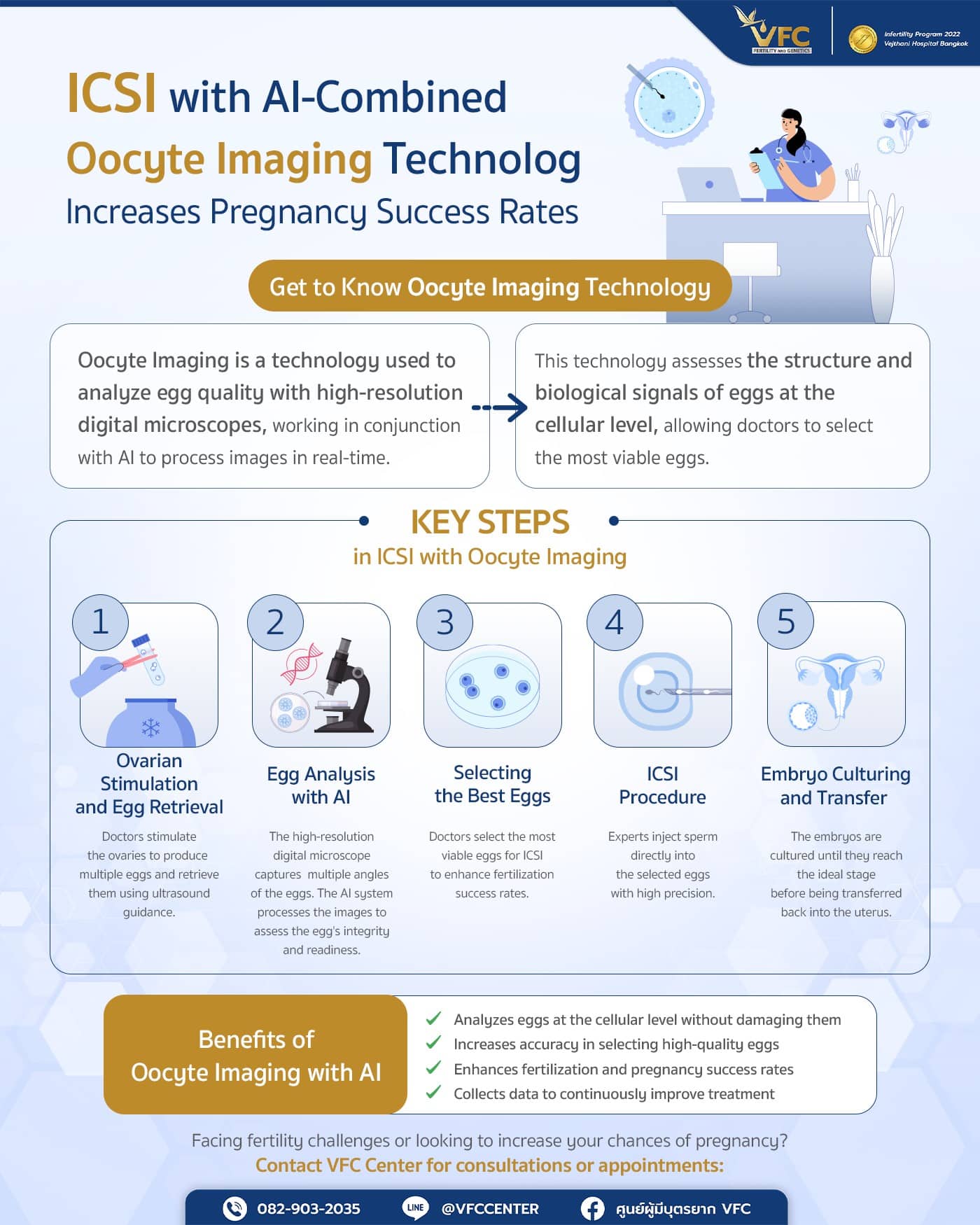
Benefits of Oocyte Imaging Technology for ICSI Success
Enhancing the ICSI Process
Embryologists can tailor sperm injection based on egg quality, making every step more precise and systematic.
Improving Fertilization and Embryo Implantation Rates
When the selected eggs are of high quality, the resulting embryos are stronger, increasing the chances of successful implantation and pregnancy.
Reducing the Risk of Using Poor Quality Eggs
AI can detect structural abnormalities in eggs, such as misaligned chromosomes or imbalanced cytoplasm, without harming the eggs. This minimizes the risk of using flawed eggs for fertilization.
Supporting Clinical Data for Treatment Improvement
The data captured through Oocyte Imaging is stored for future analysis, helping doctors understand the factors that influence egg quality and fertilization success, improving treatment protocols over time.
Who Should Consider Oocyte Imaging with ICSI?
This technology is ideal for couples looking to improve their ICSI success rates, especially for those with egg quality concerns, such as
- Couples who have previously failed IVF or ICSI attempts.
- Women over 35, as egg quality naturally declines with age.
- Women with fewer eggs or eggs with irregular characteristics.
- Couples seeking advanced reproductive technology to maximize their chances of pregnancy.
Interested in Oocyte Imaging with ICSI? Consult at VFC Center.
At VFC Center (V-Fertility Center), we use Oocyte Imaging technology in conjunction with the Nikon Eclipse Ti2 digital microscope and AI to help analyze and select high-quality eggs for ICSI. This allows doctors to view detailed egg features and safely enhance fertilization efficiency with advanced technology, improving pregnancy success rates. VFC Center offers an ICSI treatment package and is ready to guide you through every step of the process. Contact us right away for consultation.
Article by: Dr. Worawat Siripoon
For consultations or appointments, contact:
VFC Center – V-Fertility Center
Hotline: 082-903-2035
LINE Official: @vfccenter
Frequently Asked Questions (FAQs)
Q: How is Oocyte Imaging different from traditional egg observation?
A: Traditional microscopes only observe the external shape of the egg. Oocyte Imaging with AI analyzes internal structures like cytoplasm clarity and chromosomal alignment, providing more accurate egg quality assessments.
Q: Is Oocyte Imaging safe for eggs?
A: Yes, it’s completely safe because the process is non-invasive. No chemicals or radiation are used, so eggs remain undamaged.
Q: How much can Oocyte Imaging with AI improve pregnancy chances?
A: Clinical data shows that this technology significantly improves fertilization and embryo implantation rates compared to traditional egg selection methods.
Q: Is Oocyte Imaging with AI suitable for women of all ages?
A: It’s especially beneficial for women over 35 or those with poor egg quality, as it helps doctors select the best eggs for ICSI procedure.

OBSTETRICS AND GYNAECOLOGY-REPRODUCTIVE MEDICINE
No Comments
Sorry, the comment form is closed at this time.