





Sleep is when the body repairs and regenerates its systems, especially the male reproductive system. When sleep deprivation occurs, testosterone levels drop, disrupting sperm production. Testosterone is one of the main sex hormones responsible for sperm development; reduced levels can lower sperm count and motility, leading to low sperm quality and long-term fertility problems.
Understanding the link between sleep and sex hormones is essential for men planning to start a family in the future.
The Connection Between Sleep and Male Sex Hormones
Testosterone, the primary male hormone, is crucial for sperm production and its release cycle is closely tied to sleep patterns.
- Hormone production cycle: The body produces the highest amount of testosterone during deep sleep, especially in the early morning hours when restoration and energy recovery occur.
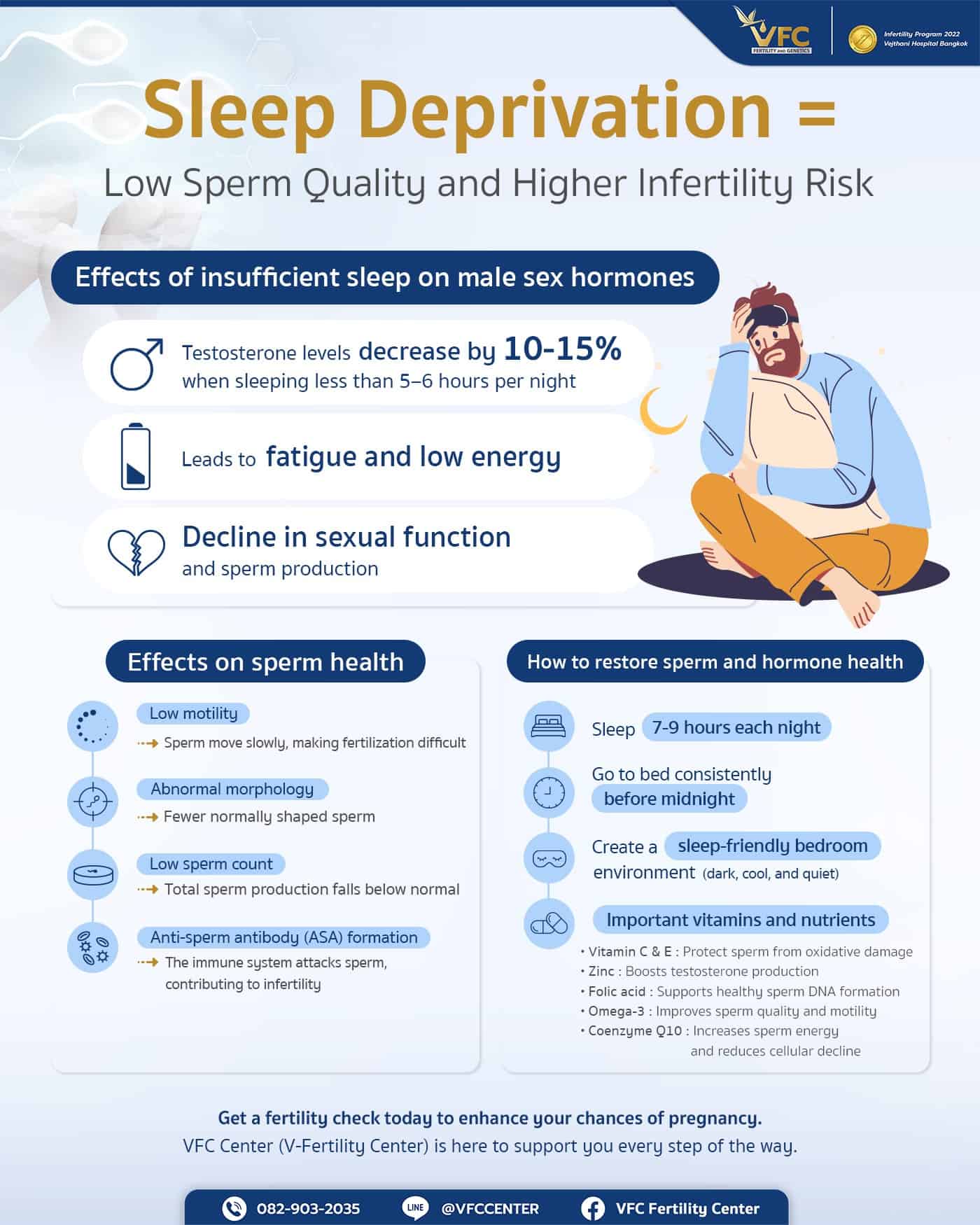
- Impact of insufficient sleep: Sleeping less than 5-6 hours a night can lower testosterone levels by 10-15%, equivalent to several years of natural aging. Low hormone levels can cause fatigue, decreased libido, reduced stamina, and impaired sperm production.
How Sleep Deprivation Leads to Low Sperm Quality
Lack of sleep affects sperm in several ways:
- Overall sperm quality decline: Poor sleep disrupts sperm production, leading to:
- Reduced motility: Sperm move more slowly, making fertilization harder.
- Abnormal morphology: Fewer normally shaped sperm are produced.
- Lower sperm count: Total sperm production drops below normal.
- Long-term hormonal imbalance: Chronic sleep deprivation disrupts the hypothalamic-pituitary-gonadal axis, the hormonal system controlling reproductive function accelerating reproductive aging.
- Immune response against sperm: Stress and poor sleep can trigger the immune system to misidentify sperm as foreign cells, producing anti-sperm antibodies that destroy them, a major cause of male infertility.

Daily Habits That Decrease Male Hormone Levels
Besides sleep deprivation, certain lifestyle habits accelerate hormonal decline and contribute to low sperm quality:
- Irregular sleep schedule: Staying up late disrupts circadian rhythm and interferes with hormone secretion.
- Chronic stress: Persistent stress increases cortisol production, which suppresses testosterone.
- Substance use: Alcohol, smoking, and recreational drugs harm overall health and directly damage sperm cells.
For advice on managing risk factors affecting sex hormones, visit VFC Center (V Fertility Center)
Restoring Sperm and Hormonal Health Through Sleep and Nutrition
To prevent low sperm quality, lifestyle adjustments are key for men planning to conceive.
-
- Sleep 7-9 hours per night: Sufficient rest allows full hormone regeneration and sperm cell repair.
- Maintain consistent sleep hours: Go to bed and wake up at the same time daily to stabilize your circadian rhythm.
- Sleep before midnight: Ideally before 11:00 p.m., to align with the body’s peak hormone production during deep sleep.
- Create a restful environment: Keep your bedroom dark, cool, and quiet to encourage deep sleep.
- Nutrition and supplements for sperm and hormone health:
-
- Vitamins C & E: Reduce oxidative stress and protect sperm from damage.
- Zinc: Boosts testosterone levels and supports sperm production.
- Folic acid: Helps form healthy sperm DNA.
- Omega-3 fatty acids: Improve sperm motility and quality.
- Coenzyme Q10: Enhances sperm energy and reduces cellular aging.
Combining sufficient sleep with proper nutrition restores hormone balance, boosts sperm quality, and lowers the risk of infertility effectively.
Evaluate Sperm Health and Fertility at VFC Center
If you feel fatigued, notice reduced sexual performance, or suspect low sperm quality, it’s time for a reproductive health check. Early evaluation is crucial, especially when planning a family.
At VFC Center (V Fertility Center), you can receive a comprehensive fertility assessment, expert consultation, and medical support from experienced reproductive specialists. The clinic provides safe and effective treatment plans to enhance your fertility potential, including advanced procedures such as PESA TESE sperm retrieval.
Article by: Dr.Sorramon Songveeratham
For consultations or appointments, contact:
VFC Center – V-Fertility Center
Hotline: 082-903-2035
LINE Official: @vfccenter
Frequently Asked Questions (FAQs)
Q : How does sleep deprivation affect sperm production?
A : Sleep deprivation lowers testosterone—an essential hormone for sperm creation—causing reduced sperm count, slower motility, and abnormal morphology, all of which impact fertility potential.
Q : What are simple ways to improve sperm quality?
A : Get 7–9 hours of sleep nightly and eat nutrient-rich foods high in vitamins C, E, zinc, folic acid, and omega-3s. These habits help restore sperm and sex hormones to healthy levels.
Q : What lifestyle habits harm testosterone production?
A : Late-night schedules, stress, alcohol, smoking, and drug use all reduce testosterone and accelerate reproductive decline.
Q : Can adequate sleep improve sperm quality?
A : Yes. Deep sleep enables optimal testosterone production, regenerates the reproductive system, and enhances sperm health.
Q : Which vitamins or supplements improve sperm quality?
A : Vitamins C and E protect sperm from oxidative stress, zinc increases testosterone, folic acid supports sperm DNA, and omega-3s enhance sperm motility.

OBSTETRICS AND GYNAECOLOGY-REPRODUCTIVE MEDICINE
No Comments
Sorry, the comment form is closed at this time.