





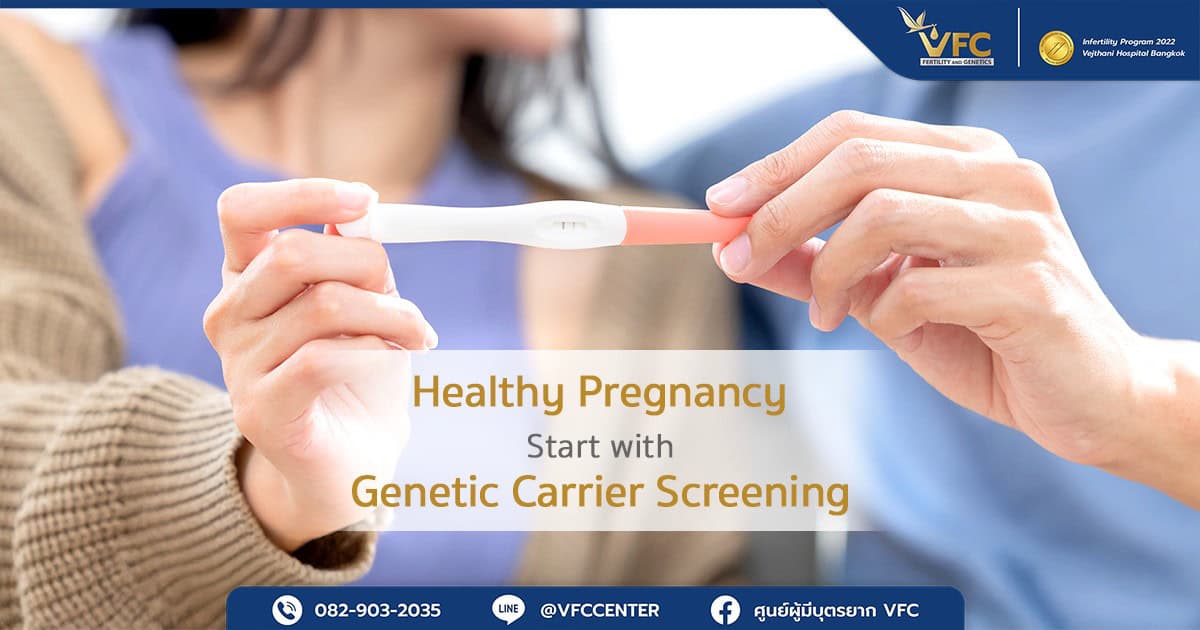
Pregnancy planning is more than just love; it involves comprehensive health preparation. In this day and age, screening for the risk of genetic disorders has become crucial, helping new parents alleviate worries and prepare for a healthy family life.
Every human possesses genes passed from parent to child. Sometimes, these genes can be “carriers” of certain diseases. A carrier usually does not show symptoms but can pass the abnormal gene to their child. If a child receives abnormal genes from both parents, they are at risk of developing the genetic disorder.
What is Genetic Carrier Screening and Why Is It Important?
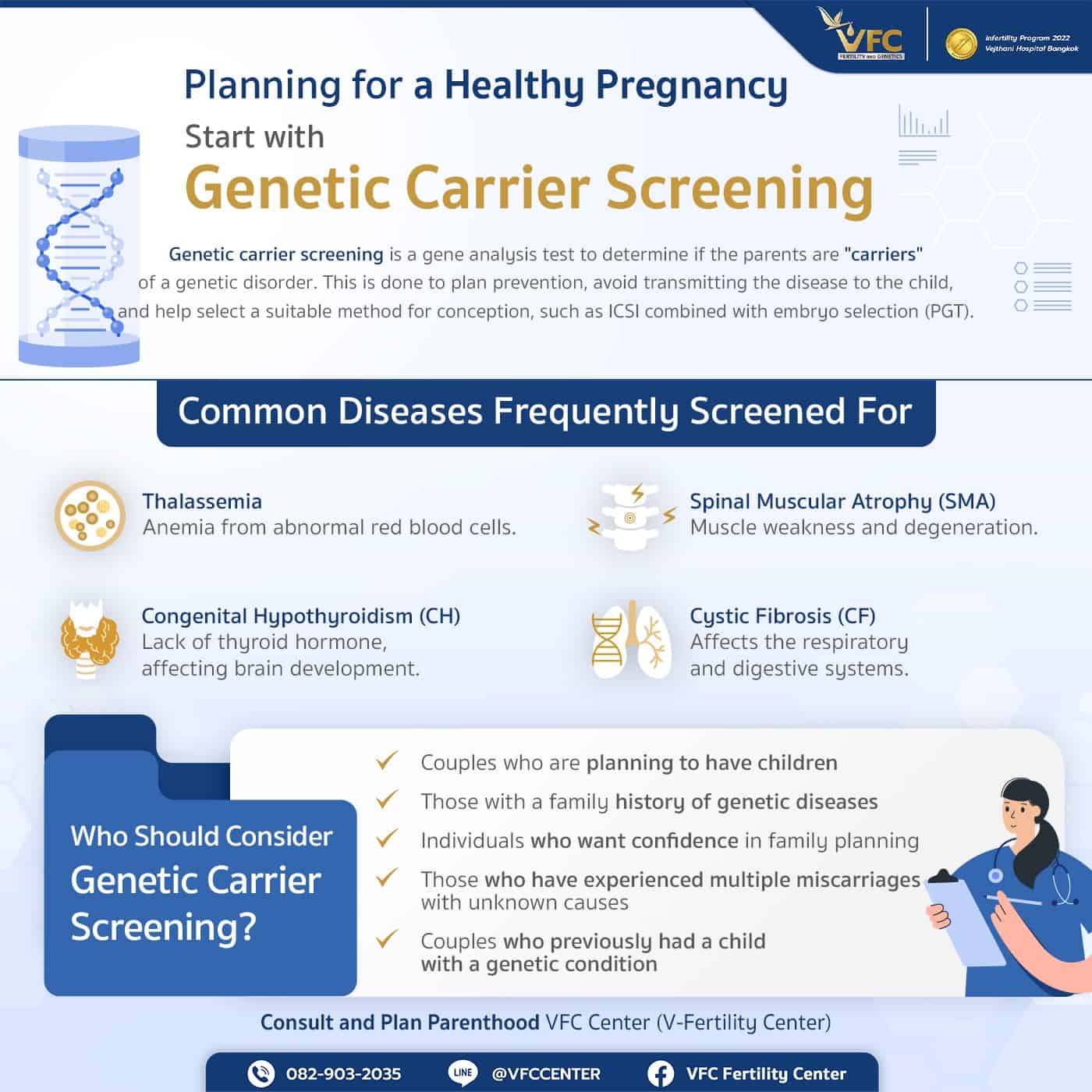
Genetic carrier screening is a gene analysis test performed to determine whether an individual is a carrier of a genetic disorder, such as Thalassemia, Spinal Muscular Atrophy (SMA), or other genetic conditions that can be passed on to a child. This testing is extremely important for couples engaged in pregnancy planning because it allows doctors to assess risk and provide timely, appropriate consultation, such as:
- Risk Prevention: If both partners are found to be carriers of the same disease, the doctor can plan strategies to prevent the disease from being passed on to the child.
- Pregnancy Planning: It helps couples decide on the most suitable method for conception, such as ICSI combined with preimplantation embryo selection, to ensure the embryo is free from disease risk.
Knowing the risks early allows couples to plan their child’s future healthcare comprehensively, reducing anxiety and increasing confidence in the pregnancy.
Consult with a fertility specialist to increase chances of successful pregnancy planning.
Which Diseases Does Genetic Carrier Screening Cover?
Medical advances now allow for a much wider range of genetic carrier screening, from testing for a few common diseases to a Comprehensive Carrier Screening that covers hundreds of genetic disorders in a single test, effectively identifying the risks of various rare diseases. Common diseases frequently screened for include:
Thalassemia
Thalassemia is a blood disorder caused by abnormal hemoglobin production, leading to irregular red blood cells. If both parents are carriers of thalassemia, their child has a high risk of developing the disease, which can have severe symptoms.
Spinal Muscular Atrophy (SMA)
SMA is a genetic disorder that causes the degeneration of motor neurons in the spinal cord, leading to muscle weakness and affecting physical development and movement.
Congenital Hypothyroidism (CH)
This condition occurs when a newborn has low thyroid hormone levels, essential for brain development. Without treatment, it can lead to intellectual disability.
Cystic Fibrosis (CF)
CF is a genetic condition that affects the respiratory and digestive systems, causing thick mucus buildup in organs, leading to breathing problems and difficulty absorbing nutrients.
Additionally, comprehensive screening can identify hundreds of other rare diseases that may not show symptoms in the carriers, allowing for more thorough pregnancy planning and future health care for the child.
Ready for genetic carrier screening? Consult with fertility specialists from VFC Center here.

Who Should Consider Genetic Carrier Screening?
Genetic carrier screening should be considered by couples, especially those in the following categories:
- Couples engaged in pregnancy planning as a foundational step to reduce potential risks.
- Those with a family history of genetic diseases, as screening helps confirm risks and prevent issues
- Individuals who want a secure and well-planned approach to family-building. Comprehensive screening ensures peace of mind at every step
- Those who have experienced multiple miscarriages with unknown causes, as testing can uncover potential genetic issues
- Parents who have previously had a child with a genetic disorder, confirming that both parents are carriers and that the abnormal gene was passed to their child. Screening helps identify the genetic disorder, so you can plan your next pregnancy with a fertility specialist.
Genetic carrier screening is not intimidating, it is a crucial tool that ensures confident and safe family planning. Knowing the risks early allows for timely preventive action, reducing anxiety about the baby’s health. If you are planning to have a child and want to better understand inherited diseases, you can consult with an experienced obstetrician-gynecologist and reproductive medicine specialist at VFC Center (V-Fertility Center), a trusted center for infertility screening in Bangkok. We are ready to assist you through every step, from genetic analysis and egg stimulation planning to personalized treatment, to increase your chances of becoming complete parents.
Article by Dr. Nannapat Parosiyanont
Contact or Book a Consultation:
VFC Center – V-Fertility Center
Hotline: 082-903-2035
LINE Official: @vfccenter
FAQs
Q: Do both partners need to undergo genetic carrier screening?
A: It is recommended that both partners get tested, as many genetic disorders only manifest when the child inherits the abnormal gene from both parents. Testing both individuals provides the best way to assess the risk.
Q: When can genetic carrier screening be performed?
A: You can undergo the screening at any time, but it is especially recommended before you begin active pregnancy planning.
Q: Does genetic carrier screening require a blood test?
A: Most genetic carrier screening is done by taking a small blood sample for analysis in a laboratory. It is a quick and straightforward procedure.
Q: If the test results show a risk, what are the next steps for care?
A: If both partners are found to be carriers of the same disease, the doctor will provide consultation and develop a plan together, such as performing ICSI combined with embryo selection (PGT-M) to ensure that the embryo transferred is healthy and has not inherited the abnormal genes from the parents.

No Comments
Sorry, the comment form is closed at this time.